Tag Archives: Maine

Messy Winter Storm Monday Night Into Tuesday

Hello everyone!

This evening’s update will focus on an impactful and messy winter storm forecast to move through the area Monday night into Tuesday. It will bring with it copious amounts of all precip types with significant snow in the far north, sleet and freezing rain for most, and heavy rain along the shorelines.
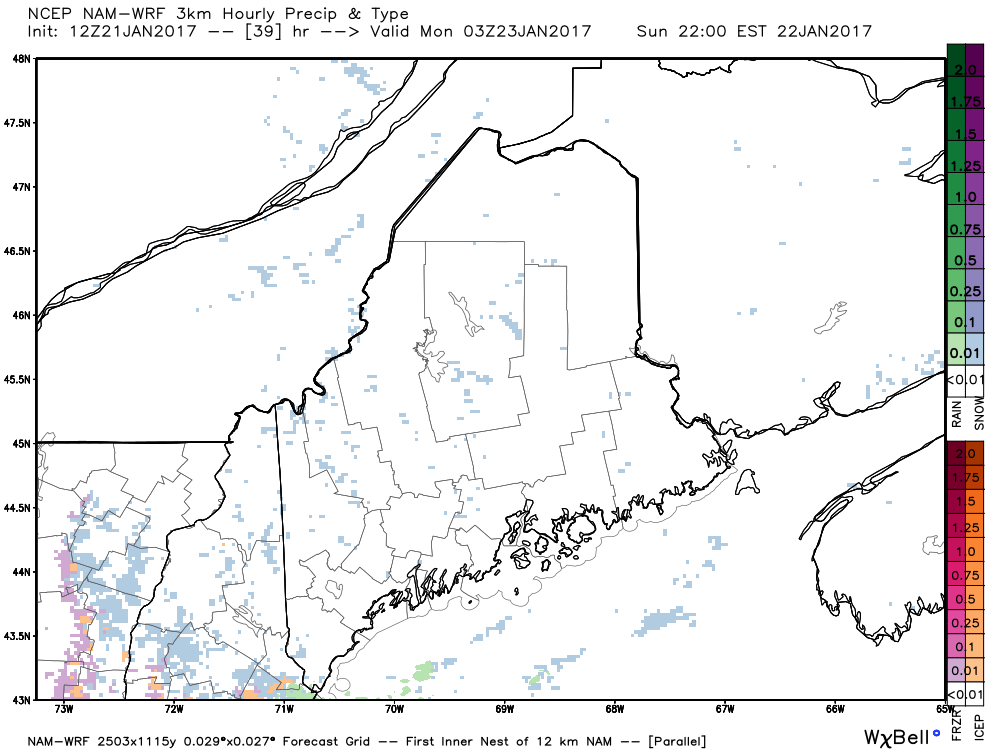
12Z 3km NAM Showing Light Flurries Tomorrow Night. Credit: Weatherbell

The event will technically begin tomorrow during the afternoon as shifting winds aloft bring some light moisture into the area. The greatest chance for precip will be across southern areas where some ocean moisture will become entrained in the NE winds and also in the mountains where some upsloping will aid in precip development. Precip will fall as sprinkles of the liquid variety along the southern coast, flurries in the mountains, and pockets of sleet/freezing rain across interior SW NH. No accumulation is expected but some slick spots are possible here or there.

18Z NAM Vertical Slice Compilation Tomorrow Evening. Image Credit: Accuweather

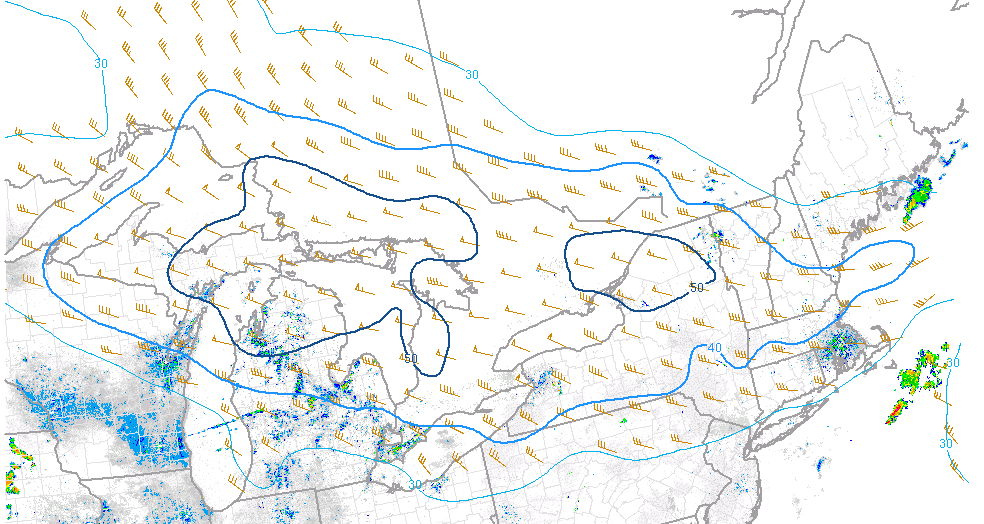
Shown to the left is a series of maps that holds the key to this forecast. The model and time are kept the same with each map displaying a forecast for a different slice of the atmosphere. The top forecast is for about 25,000 feet followed by 10,000, 5,000, 2500, and 0 feet. The feature of interest is a back door cold front moving SW across the area tomorrow evening. Notice how it slopes backward over the cold airmass with the most forward progress of the cold wedge at the surface and the least progress aloft. This sets up a situation where you have a deep cold intrusion at the surface (and a high pressure system over Quebec to lock it in) and an environment only marginally cold aloft. This sets up a situation where warm air can easily flood in aloft but will have a hard time making headway at the surface. This is why we’re in for more freezing rain/sleet than snow for most of the area. The best chance for sizeable snowfall accumulation will be the far NW mountains. The poleward slope of the cold frontal surface illustrated above means that we’ll have an excellent isentropic overrunning surface as warm air is forced to glide up and over the low-level cold dome.
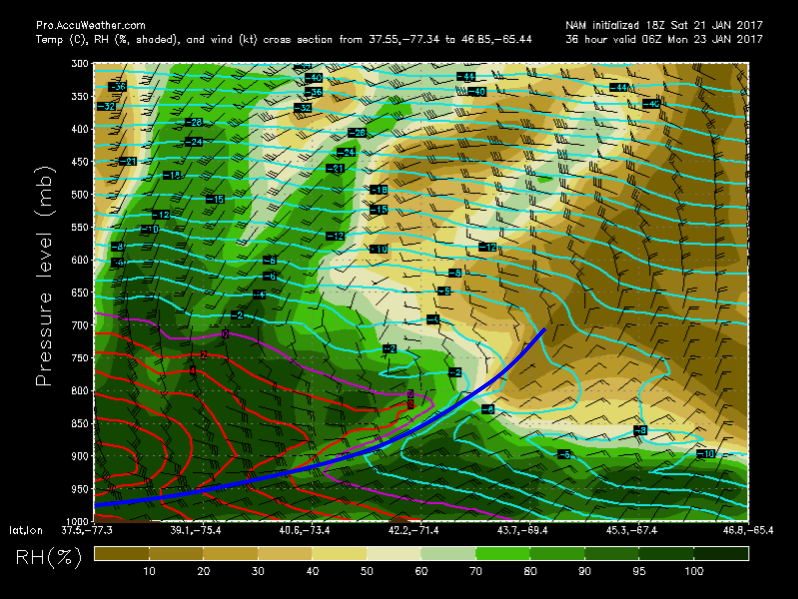
18Z NAM NB-VA Cross Section Showing A Well Defined Poleward Sloping Cold Frontal Surface. Image Credit: Accuweather

Here’s a cross section showing another view of the same phenomenon we discussed above. Because of the discrepancy between airmasses, this boundary acts similarly to a material surface along which air will rise. This sets up the arrival of precip Monday evening, initially as snow due to the deep cold air. You can see the warm nose moving in from the SW on the cross-section, it’s the little kink to the right in the purple (0C) line. That’s the warm air riding up and over our cold front. The image is valid 1 AM Monday morning. Also notice the low-level moisture on the cold side of the front. This is why we’ll see some light flurries/sprinkles/drizzle Sunday night and Monday morning.

Now that we’ve established that we’re looking at an elevated warm layer and a near surface cold layer, let’s look at a sounding (vertical profile of the atmosphere at a single point) to determine if we’re looking at inches of sleet or a damaging ice storm.

12Z NAM Sounding For Lewiston At 7AM Tuesday

Thankfully for the power grid, the cold layer near the surface looks deep enough to allow for sleet to be the dominant precip type. While the deep warm layer will melt snowflakes, the deep cold layer near the surface will allow for those raindrops to refreeze into ice pellets rather than freeze on contact with the ground. That’s not to say that some folks won’t see ice accumulation but it likely won’t be heavy enough to cause power outage issues. Don’t worry though, we have winds for that job along the coast. For more on how warm/cold layers impact precip type, check out one of my recent UpPortland columns where I explain various forms hydrometeors make their way to the ground.

NAEFS Ensemble U-Vector Anomaly Tuesday Morning Showing Anomalously Strong East Winds At 850mb. Image Credit: NWS/NOAA

Here’s a look at the mid level winds which will be very strong out of the east/south east. The map to the left shows the anomaly in the u vector which is the east/west component of the wind. The highly negative u vector means the easterly component of the wind will be exceptionally strong. This will help not only to bring warm air into the region aloft, but it will also help introduce the threat for gusty winds out of the east along the midcoast early Tuesday morning.
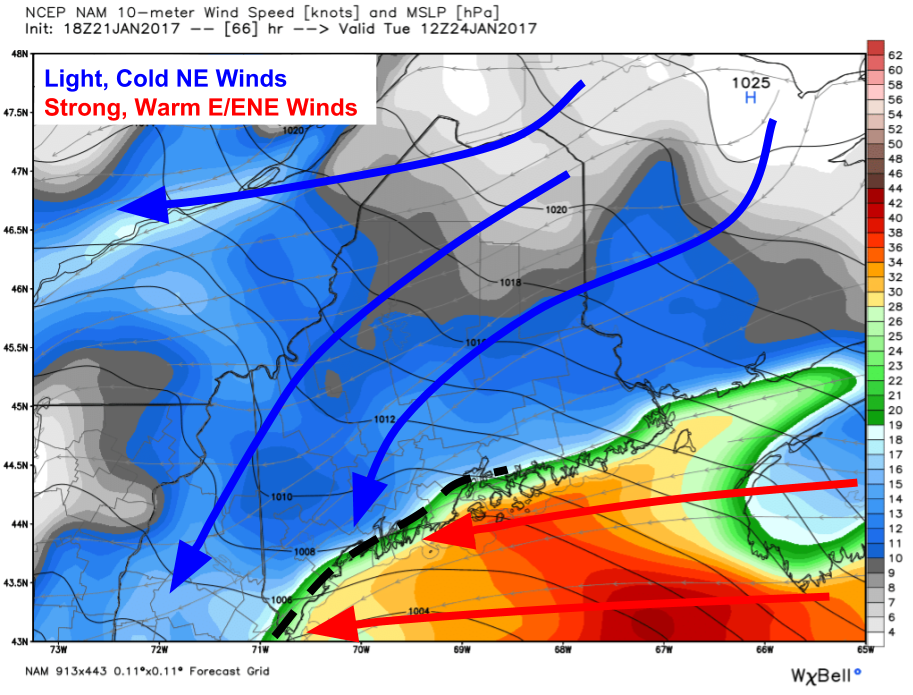
18Z NAM Showing Strong Winds For The Midcoast And Southern Shorelines Tuesday Morning. Image Credit: Weatherbell

Winds will be an issue along the midcoast and any other shoreline towns that happen to make it into the maritime airmass E of the coastal front. Wind gusts of 40-45mph are likely for a time Tuesday morning as low pressure approaches. On the western side of the coastal front, look for cold but lighter N/NE breezes to keep cold air locked in place at the surface resulting in slippery travel and messy precip types.

12Z NAM Showing Gusty Winds Just Above The Surface In Rockland Tuesday Morning

Here’s another view of the wind potential as shown by a vertical cross-section through time above Rockland. Notice the strong low-level jet just off the surface. Any winds below the yellow line are ‘eligible’ to be mixed down to the surface via momentum transfer and as a result, there is fairly high confidence in 40-45mph gusts along the midcoast Tuesday morning. For more on momentum transfer, check out one of my UpPortland columns from a while back where I explain it.

Tide Forecast For Portland Through Wednesday Morning. Image Credit: NWS/NOAA

All those easterly winds over the Gulf of Maine will push water up along the coast. While thankfully we’re not experiencing astronomically high tides, some splashover is possible as shown by the black total water level forecast above the first red line which is mean higher high water level. The specifics of that value are complicated but you should know the little yellow line (storm surge) will be between 1 and 2 feet and will push water high enough for some minor coastal flooding though no major impacts are expected.

Precip Type Forecast For Monday Night Through Tuesday

Here are my thoughts on precip type. Rain will be confined to the midcoast/shorelines and most of the area will see sleet for most of the event after an initial thump of snow. During that initial thump, 2-4″ can be expected for most. An additional few inches up in the northern mountains will likely bring totals to the 4-8″ range in the blue zone on the map above.
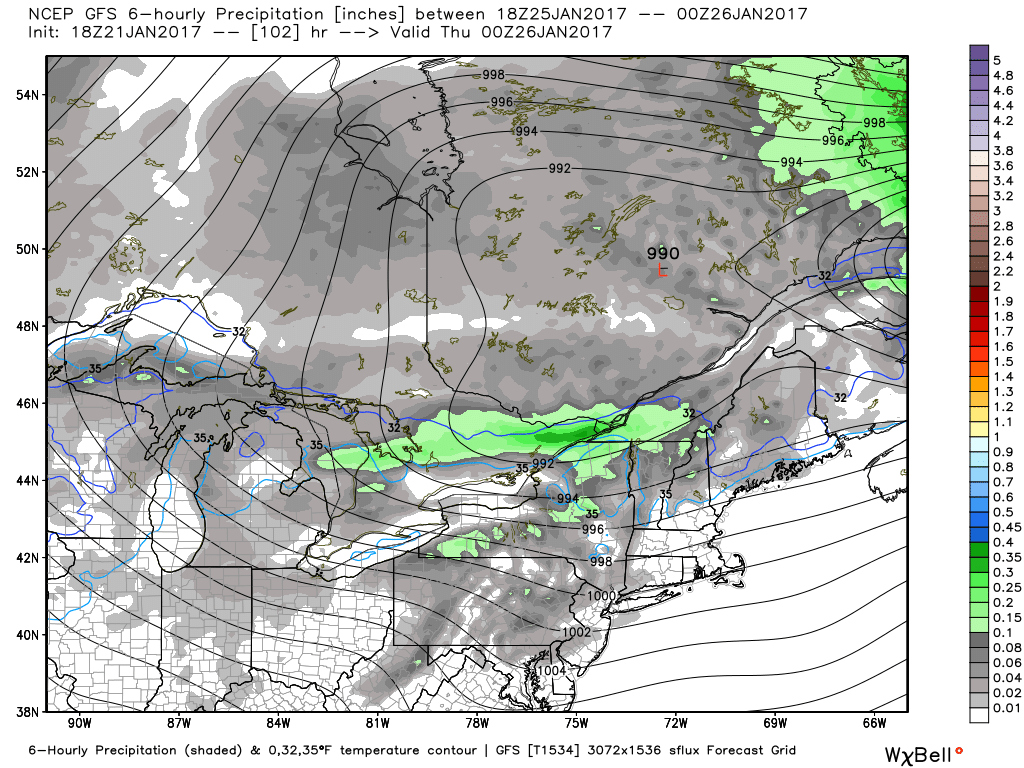
18Z GFS Showing Another Round Of Light Precip Wednesday Evening. Image Credit: Weatherbell

Precip moves out Tuesday evening and we’ll be left with a relatively mild airmass and dry weather for about 24 hours before another system approaches from the west. This one will be much weaker and is likely to bring just a brief period of snow/mix to the mountains with rain showers in the south. Little to no accumulation is forecast but some slick spots will once again be likely. Behind this system, colder air will begin working back into the region as winter’s comeback begins.

More tomorrow after I enjoy some turns up at Sunday River. As a result, tomorrow’s update may be a little later in the evening but will contain all the latest analysis.

-Jack

Winter’s Comeback Begins

Hello everyone!

I hope all you worshipers of warmth enjoyed your brief break, because winter’s comeback is beginning. Rain and snow will arrive tomorrow evening becoming mostly snow during the overnight hours. Snow will last through the mid morning hours before tapering off to flurries/drizzle by Wednesday afternoon. After that, an active pattern looks to kick into gear with a possibly significant precipitation event by the end of the week.

WV Satellite Imagery Showing Our Storm System Off To The West. Image Credit: COD

The setup for this event involves almost everything you can see on the map here. Cold air is moving SE into the area as a backdoor cold front moves through tonight. Our storm is located all the way back in Kansas and will weaken as it moves NE. The moisture pipeline will be in business from the Gulf of Mexico but it will be weakening along with the storm. The bottom line: with all the elements weakening as they approach us and the pattern across the Northern Hemisphere generally being flat/zonal, this won’t be an event that features heavy precip. Let’s look at some of the dynamics associated with the system to test that hypothesis.

12Z GFS Showing The Weak Upper Level Dynamics Early Wednesday Morning. Image Credit: Accuweather

The pattern aloft can give many clues as to how storms will behave at the surface and this time is no different. For big storms, we want our upper level energy to be strong, negatively tilted, and consolidated. This situation will feature the exact opposite of that as our energy is weak, strung out, and positively tilted. Even though a coastal low will develop, it will move east then south-east rather than north-east up the coast. You can thank the positive tilt for that. The two disturbances are separate and the lack of strength can be attributed to this.

Upward Motion Map Showing Broad/Weak Lift Wednesday Morning. Image Credit: Accuweather

Sure enough, our hypothesis of weak lift/precip holds up in the upward motion department as the 12Z NAM shows. Notice how we enjoy the yellows/oranges rather than the reds/pinks that usually show up on maps like this during big storms. As a result of the weakening surface storm, the disorganized upper level dynamics, and the weak lift, precip will be light to moderate at best and heavy bands are not expected.

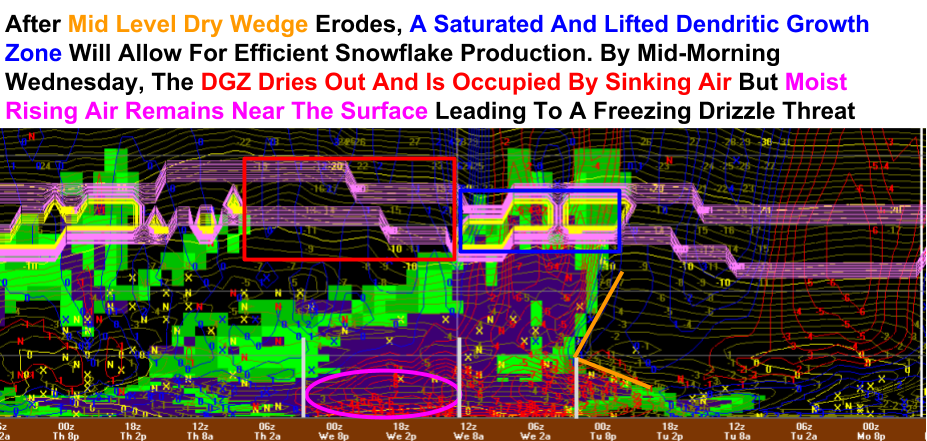
12Z NAM Vertical Profile Giving An Overview Of The Event.

Here’s the NAM’s take on the event shown through a vertical cross-section of the atmosphere above Portland through time. While the NAM certainly has its flaws, it gives a good look at the various dynamics involved through the event. Notice how the moisture near the surface remains even well after the snow may stop. Given the colder air moving S behind the departing low and the presence of this moisture, look for freezing drizzle to be an issue through the day on Wednesday. This will result in slick roads even after the snow moves out.

12Z NAM Showing Precip Moving In Tomorrow Evening. Credit: Tropical Tidbits

Precip will arrive tomorrow evening in the form of snow inland and a rain/snow mix along the immediate coast. Everyone except the extreme SE midcoast (Rockland) and coastal York County will quickly go over to snow which will be the dominant precip type throughout the event. As coastal low pressure develops off Long Island, expect precip to become focused in the southern half of the area by Wednesday morning before tapering off to flurries and freezing drizzle by Wednesday afternoon. A weak inverted trough will act to keep the moisture around for that freezing drizzle even well after the snow departs.

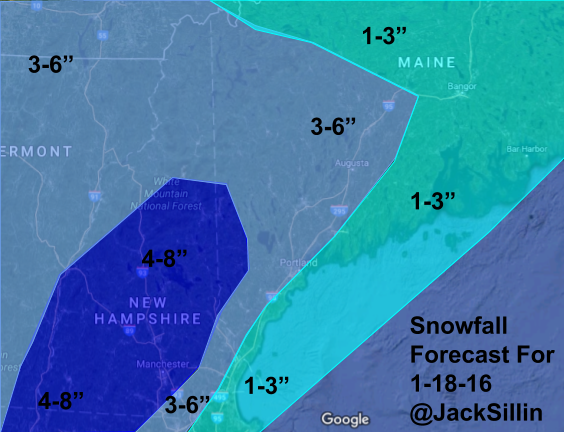
Expected Snowfall Tuesday Night Through Wednesday Morning

Here’s what I think everyone will end up with when all is said and done on Wednesday afternoon. The coast sees the least due to mixing and totals drop off to the NE as less precip will fall there. The Jackpot will be in NH and far W ME where 6-8″ are possible in the foothills and mountains. This will be a great refresh for the ski areas especially those in the whites and places in Maine like Sunday River, Shawnee Peak, and Mt Abram. Farther NE, Sugarloaf will definitely get some flakes but won’t have the lift to squeeze out more than 2 or 3″. I’ll see if I have time to update this tomorrow before the flakes fly.

12Z GEM Showing More Flakes For Some On Thursday. Image Credit: Weatherbell

More flakes will be in the air on Thursday as a cold front/weak storm drifts by to our north. The mountains and far north will see the most out of this one with a whopping 1″ possible. Some upslope areas might see 2″ but that’s about it. Farther south, flurries can be expected across the foothills and coastal plain while the shorelines and southern NH may not see anything at all. The timeframe for this is during the day on Thursday.

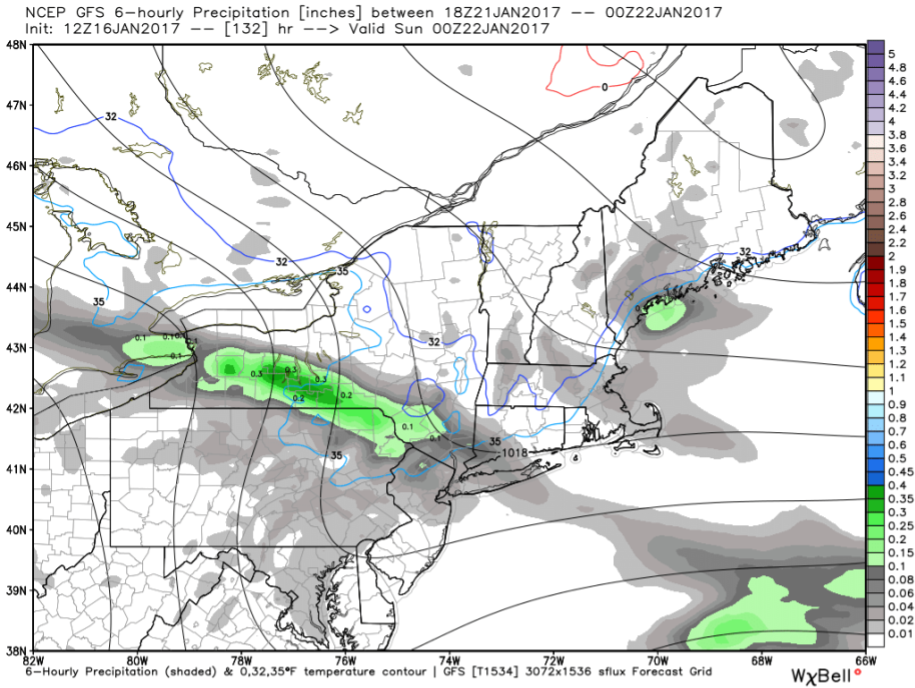
12Z GFS Showing More Light Rain/Snow Showers Saturday. Credit: Weatherbell

Our pattern of many weak little events will continue Saturday with the arrival of cooler air accompanied by rain and snow showers. At the moment, accumulations look to be less than an inch away from the coast but the cold air is important because it will set the stage for the next event which will arrive sometime this coming weekend or early next week. Whatever that event may be, it will likely bust up our ‘halftime’ pattern, ushering in colder and stormier weather to finish January and begin February.

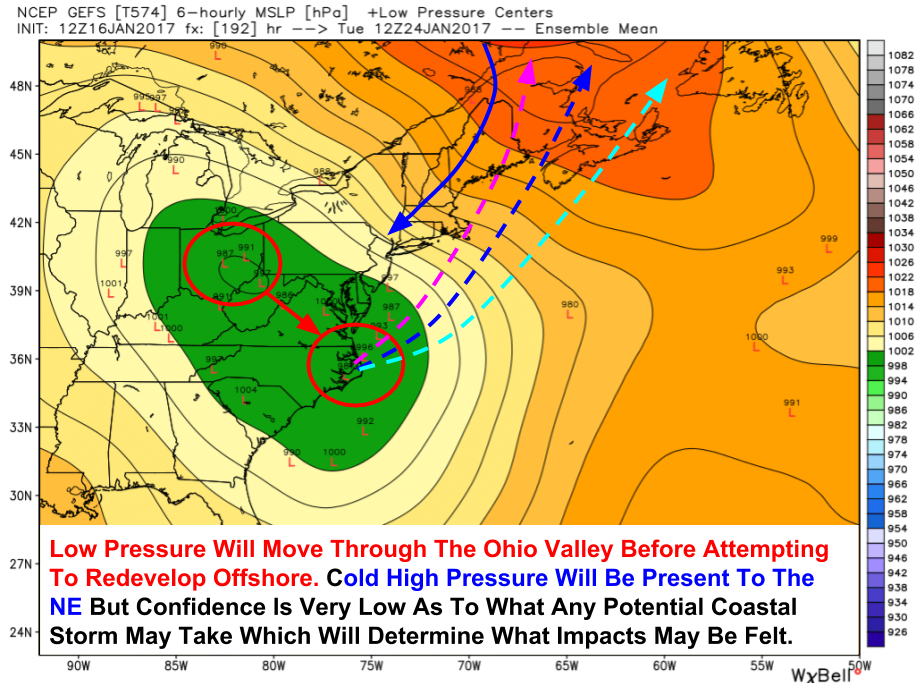
12Z GEFS Ensembles Showing Rumblings Of Action Early Next Week. Any Specifics Remain Incredibly Uncertain. Image Credit: Weatherbell

Here is a quick look at the potential storm system early next week (about 7-8 days from now). As with any potential system that far out, the details are up in the air but ensemble guidance is supported by the large-scale pattern in suggesting some sort of system could be brewing around then. I’ll have more as we get closer if it continues to look like an impactful storm is a possibility.

GEFS 10mb Temperature Anomaly Maps Show Changes In The Stratosphere Over The Next 7-10 Days. Image Credit: Weatherbell

Now I’ll take a minute to look forward at the pattern for the next couple weeks. Winter is coming back and the change is beginning at the very top of the atmosphere right now. Temperatures in the stratosphere over the North Atlantic have warmed dozens of degrees Celsius in just a few days and this will be a killer blow to the stratospheric polar vortex (the real one, not the fake one the TV stations make up for ratings/clicks/likes/shares etc). By the time we get to the middle of next week, the vortex (light blue) will be considerably weaker than it is now as multiple Sudden Stratospheric Warming events occur (red circles).

The weaker polar vortex will allow cold air to spill southward resulting in a return to winter for Maine and New Hampshire. These changes to the pattern are beginning now and will likely begin to influence our pattern by the time that storm early next week arrives in one form or another. In short, the comeback is coming.

More this week if I have time between school work, track, and sleep.

-Jack
Coastal Storm To Bring Light Snow To The Coast This Evening

Hello everyone!

I was hoping to get an update on this evening’s system out last night but other commitments prevented that so here’s a quick rundown of my thinking and why we’re not going to see a significant event.

12Z Weather Balloon Data Showing Very Dry Air In Place. Image Credit: SPC

One inhibitor of large snowfall accumulations will be ample dry air ahead of the storm that will evaporate some of the snow before it can reach the ground. A good inch or two worth of snow could be lost to mid level dry air. Do notice though that the entire atmosphere is plenty cold enough for snow. There is zero threat of any mixing with this storm but there are plenty of other forecast challenges to make things interesting!

10 AM 500mb Winds. Image Credit: Nullschool

Looking at the mid levels, it is fairly easy to see why we’re not in for a big storm and why the highest snowfall amounts will be along the coast. Both disturbances associated with the storm are positively tilted and separate while winds ahead of the system are out of the WSW which pushes the storm ENE. There is some respectable divergence (winds blowing away from each other) over the system but the setup lacks the explosive dynamics needed for a stronger storm that tracks farther west. Development of these dynamics will occur eventually but too late for us. Drive to New Brunswick or Nova Scotia for those.

10 AM Upper Level Wind Map. Image Credit: SPC

Upper level dynamics are similar to the mid level dynamics: modestly favorable but not explosive. The storm is in the right entrance region of a very strong but low amplitude jet streak. There is only one jet and no jet coupling meaning that we lack the explosive dynamics needed for a strong storm. This is the same story across all levels of the atmosphere and explains why we’re not in for any big snow. However, that doesn’t mean some areas won’t get a moderate storm.

10 AM 700mb Analysis. Image Credit: SPC

A look towards the mid levels shows pretty much the same story with one exception. Notice all the WSW flow and the positively tilted troughs but also notice the kink in the flow right over the storm itself. This kink will gradually sharpen and develop along with SE winds ahead of it. The timely development of these SE winds will be crucial to pulling the deeper moisture NW towards our area. If the kink intensifies more quickly, the SE winds will as well, and the moisture will be able to move NW therefore giving us more snow. If the kink lags in development, the opposite will be true.

Kachelmann Swiss Model Showing Expected Impacts This Evening. Image Credit: Kachelmann

Now that we’ve dug into all the dynamics behind this storm and what some of them mean, we can focus on impacts. This map from the Kachelmann Swiss model shows how the coast will see the moderate snow, the foothills the lighter snow, and the mountains only flurries. Also notice the bands of ocean enhanced snowfall across eastern MA as Arctic air currently over ME is drawn across the warm Gulf of Maine waters on NE winds ahead of the storm. In those heavy bands, over a foot of snow is possible along with blizzard conditions. This will be limited to eastern/coastal MA and no impacts that significant are forecast for the ME or NH coastlines.

HRRR Showing How Snow Evolves Over The Next 18 Hours. Credit: Weatherbell

Snow will arrive in the next hour across southern NH and will be falling across the ME coast by sundown this evening. Notice how the mountains see hardly anything while the coast enjoys moderate snowfall. Also check out all the ocean enhancement as bitterly cold air gets drawn into the storm and passes over the warm Gulf of Maine. The snow will move out in the predawn hours as the storm moves farther offshore.

Expected Snowfall Through Tomorrow Morning

Here’s my snowfall forecast for tomorrow. This will be a light/fluffy snow that will be easy to move, both by human and by wind. With steady northerly winds, some blowing snow is certainly possible which could create lower visibilities and some drifting in exposed areas though nothing major is expected.

Another cold few days are in store before a brief warmup mid week as low pressure passes to the west.

-Jack


Major Winter Storm Tomorrow Night

Hello everyone!

A very interesting and exciting ~18 hours is in store from tomorrow evening through early Friday morning. During this time, look for torrential downpours along the coast, whiteout snows inland, and strong gusty winds for all. This will be brought to you by a rapidly intensifying coastal storm that will deepen roughly 20mb in 12 hours. This is double the rate of deepening needed for official bombogenesis!

Just a quick note before the fun… If you’ve been reading my storm updates for a while, you know I get into some fairly high level (and interesting!) meteorology while outlining what I expect to happen. If you’re new to my blog, this is how I like to operate as I think it gives you the reader a unique look “under the hood” of weather forecasting. I try to explain technical concepts in an accessible way so you too can become part weather geek. If you’re not into the “why behind the what” or just simply don’t have time to enjoy lots of weather geekery, scroll to the bottom where I’ll put my snowfall map and a concise forecast. Maybe you’ll even see a map interesting enough to read about on the way down!

The Pattern

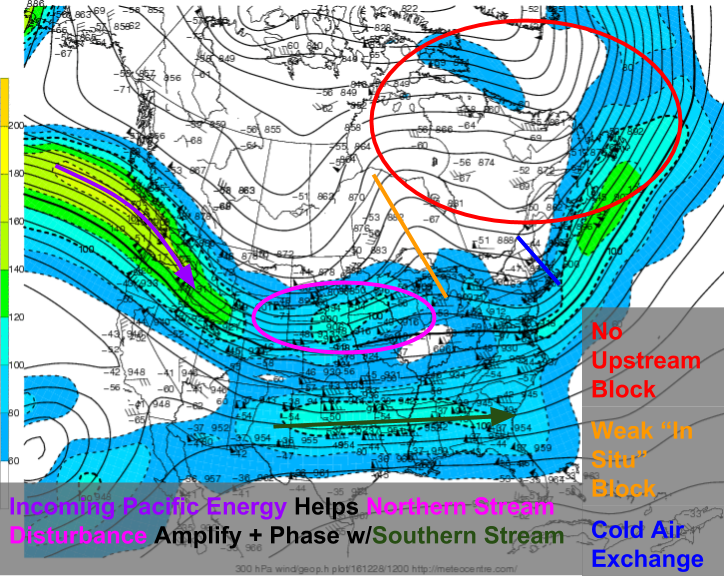
Upper Air (300mb) Pattern At 7 AM This Morning. Image Credit: Meteocentre

The upper level pattern is relatively zonal today meaning that winds are mostly blowing west to east and there are no significant disruptions in the flow (storms, blocking highs, etc.). This will change to a certain extent in the next 24 hours but it’s important to remember that the overall zonal flow will prevent this storm from sitting and dumping. Also notice the lack of any substantial blocking high pressure over NE Canada. The zonal flow and lack of blocking means that this storm will be a fast mover and totals will be limited by the short duration of heavy snow. That doesn’t mean some hefty numbers will be recorded, it just means that this storm probably isn’t one for the record books.

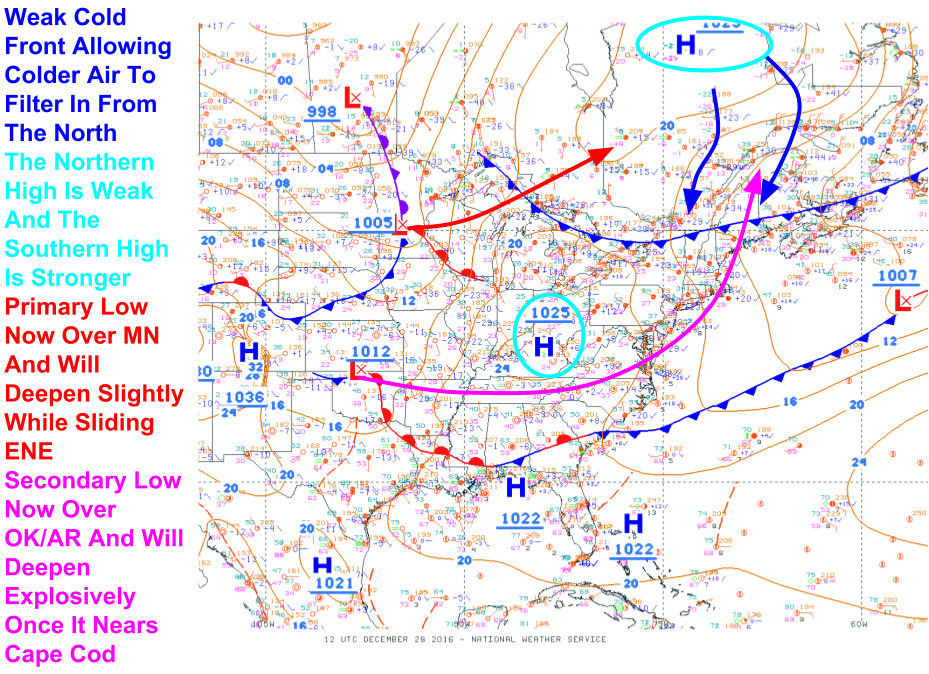
Surface Pattern At 7 AM This Morning. Image Credit: NWS OPC

At the surface, the setup isn’t quite ideal for a major storm but it does show that heavy snow is likely across the interior. The limiting factor for coastal Maine and New Hampshire will be the lack of deep cold air. This is a function of a) the zonal pattern discussed above, and b) the relatively weak high to the north and the relatively strong high to the south. This means the high to the south will be the primary driver of a) the flow ahead of the storm and b) the antecedent airmass. For big snows along the coast, we need a strong high to the N/NW to lock in the cold air and keep the cold air flooding south through the storm. This will not be the case tomorrow evening. As for the low pressure systems, the primary low was over MN this morning (it is now over SW Ontario) and the secondary low (our storm) was over northern OK (it is now over AR/SW OK).

The Onset

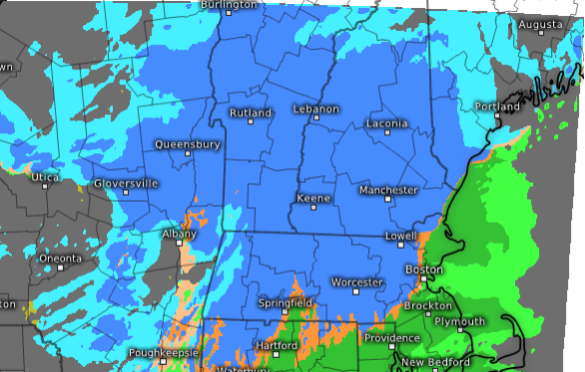
Kachelmann Swiss HD Model Showing Light/Moderate Snow Arriving Tomorrow Afternoon. Credit: Kachelmann

Snow will move into the area beginning in SW NH late tomorrow morning and ending up in the Augusta area by sundown. There are some indications precip will begin a little earlier in the Portland/Midcoast area as snow showers move in off the ocean but we’ll have to wait until mid afternoon for any more meaningful snowfall. Precip will begin as a period of snow for most if not all areas but will quickly change to rain along the immediate coast (east/south of rt 1). By sundown tomorrow, a couple of inches will be on the ground over SW NH with dustings elsewhere.

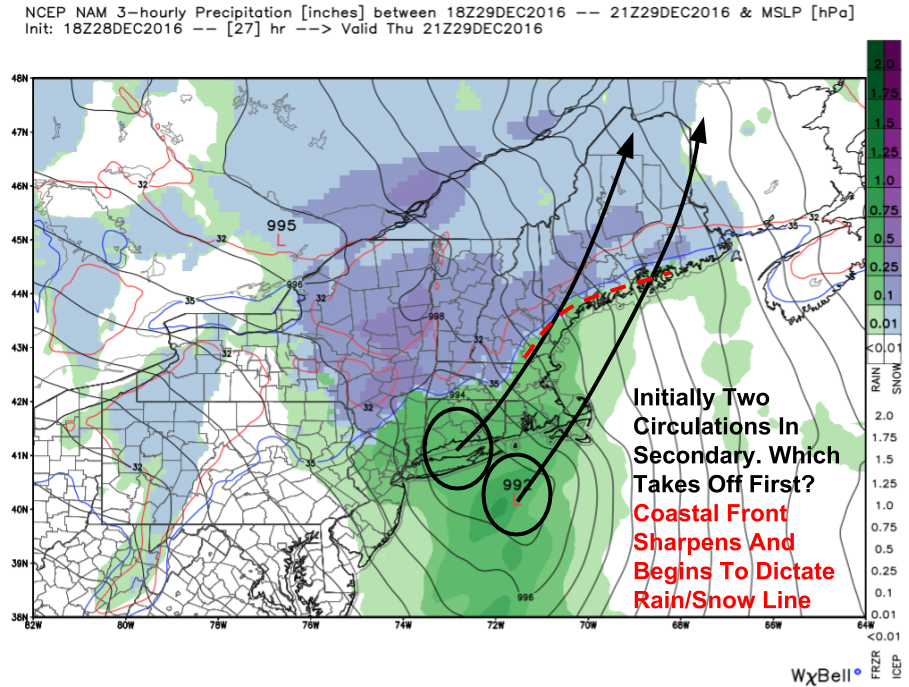
18Z NAM Showing Coastal Low Pressure Developing Thursday Afternoon. Image Credit: Weatherbell

As the evening wears on, heavier bands of snow will begin to pivot into the area as coastal low pressure kicks into gear offshore. Guidance is hinting at two circulations being present initially. Which one becomes dominant will dictate which track the low takes and thus how much warm air can wrap into the coast. If the western circulation develops, the storm will track farther to the west and the coast will be warmer, warm enough perhaps for all rain. If the eastern circulation develops, the opposite would happen with the coast seeing slightly more snow. The difference here is not between 3 and 12″, it is rather between 0 and 3-6″. This is not a storm for the coast to see big snows but if the eastern track pans out, the coast would see moderate accumulations as opposed to light/nonexistent accumulations.

The Blitz

12Z GFS Showing Intense 500mb Dynamics Thursday Night. Image Credit: Accuweather

Precip will begin to fall very heavily as powerful mid/upper level dynamics move into place Thursday night. At 500mb, it’s hard to imagine a better setup for rapid cyclogenesis. The shortwave trough is negatively tilted and a very strong vortmax is racing NNE out ahead of it. Winds ahead of both the vort and the trough are strongly divergent which favors intense upward motion across the entire area.

12Z NAM Showing Strong Jet Dynamics Contributing To Rapid Cyclogenesis Thursday Evening. Image Credit: Accuweather

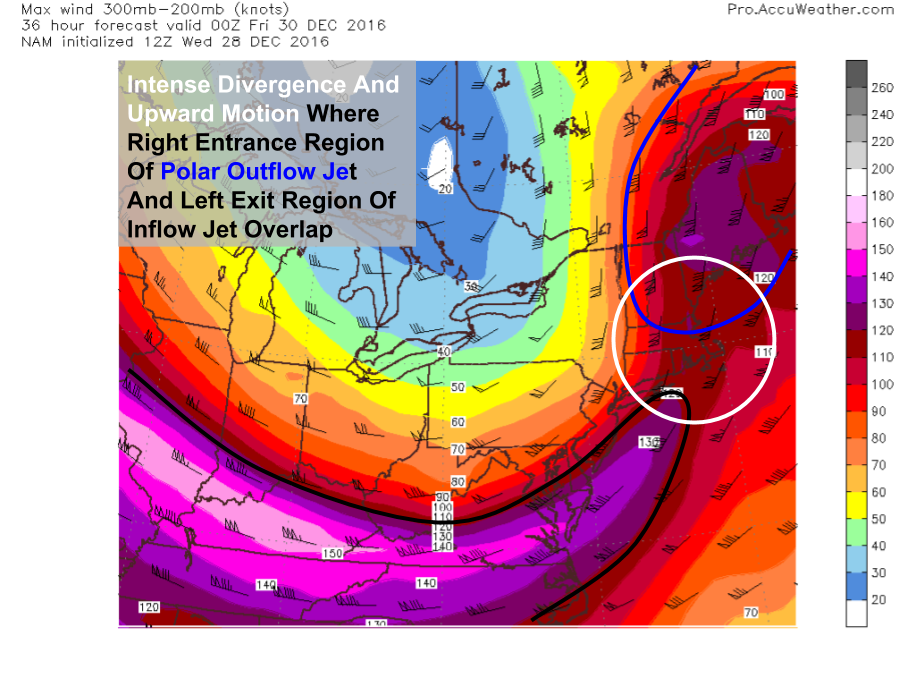
Another factor aiding in explosive cyclogenesis will be favorable jet dynamics in the upper levels of the atmosphere. The polar outflow jet of the storm is forecast to be situated in such a way that its right entrance region will overlap with the left exit region of the inflow jet to the south/south-west. This overlapping of zones favorable for divergence will allow the storm at the surface to rapidly strengthen, deepening around 20mb in 12 hours!

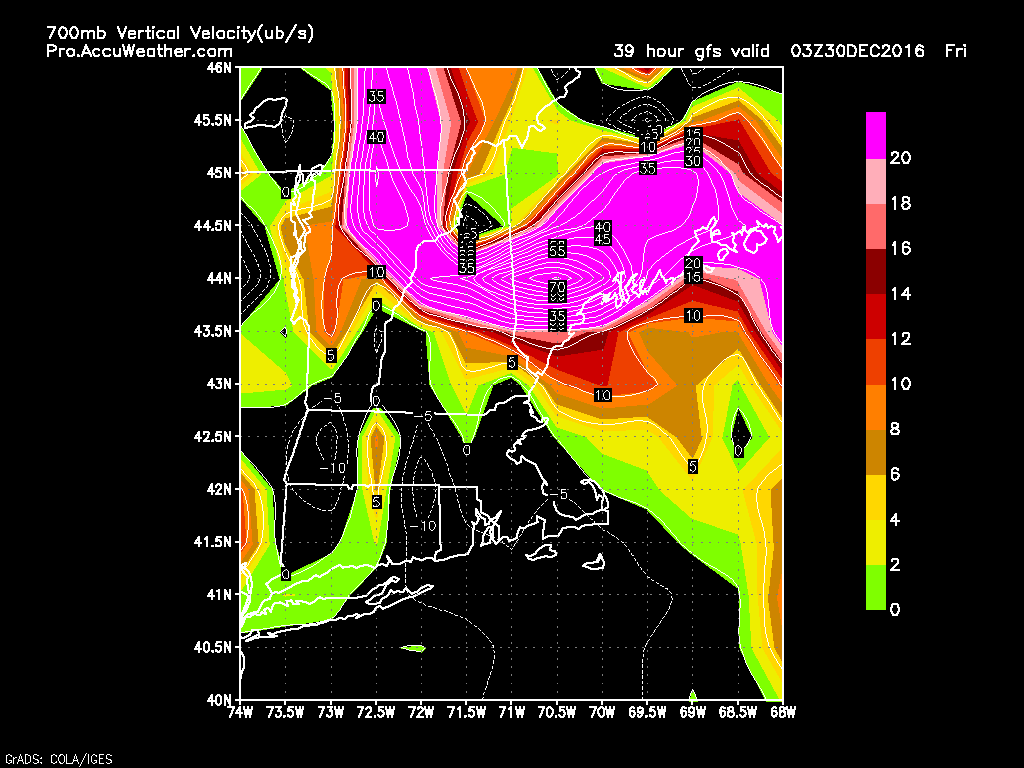
12Z GFS Showing Extremely Intense Upward Motion Thursday Evening. Credit: Accuweather

What does all this divergence mean? Upward motion Thursday night will be truly incredible. When the scale ends at 20 and values are forecast to exceed 70, you know the event is highly anomalous. The rapid deepening of the surface low, the intense vort at 500mb, and the jet dynamics at 300mb will combine to lift the air at a very high rate. What does this mean for us? Precip will be falling and it will be falling hard.

NAM 3km Simulated Radar Showing Very Heavy Precip Thursday Night. Credit: Tropical Tidbits
6Z NAM 3km Simulated Radar Showing Very Heavy Precip Thursday Night. Credit: Tropical Tidbits

A band of precip will set up Thursday evening across eastern NH and western ME that will feature whiteout snow falling at rates of 1-3″/hr+, torrential downpours along the coast, very strong winds, and possibly thunder. The fact that precip will be falling so heavily is important because of a phenomenon known as dynamic cooling. When there’s so much upward motion and so many snowflakes melting into raindrops, the atmosphere (especially the above freezing parts) will cool rapidly. This is the key to snowfall east of I-95 and N/W of the peninsulas. The next paragraph explains dynamic cooling and is borrowed from last evening’s update.

As snowflakes melt, the water they contain goes from solid (frozen) form to liquid form. This phase change requires outside energy to energize the water molecules into moving around more, thus changing the phase from solid to liquid. Where does this energy come from? The air around the melting hydrometeors (a fancy word for water (hydro) that falls from the sky (meteor) ). What happens when you remove energy from the air? It cools because, by definition, air with less energy is colder. If you have tons and tons of snowflakes melting at the same time, the temperature will continue to cool and eventually, the entire column will cool below freezing and snow can reach the ground. This process is aided by the intense lifting as air rises, cools, and is replaced at the surface by colder air moving in from the NW.

12Z GFS Showing Poor Dendritic Growth And A Deep Warm Layer In Portland Thursday Night

The problem along the coast is that the dynamic cooling has a lot of warm air to overcome. The warm layer in Portland is modeled to be around 5,000 feet deep by most guidance. Some models are colder but not by a lot. While melting and lifting will cool the atmosphere a bunch, it likely won’t be enough to get significant accumulations. The accumulating snow along the coast will come at the very end as cold air rushes in from the west while precip moves out. IF the easterly track pans out, the warm layer would be shallower and the dynamic cooling would have a chance at cooling the column enough for more substantial snows near the coast. As I mentioned above, there is a cap on snowfall potential east of I-95. I’d say this is about 6″ which would only fall in this area if a) the storm tracked a little east, b) the dynamic cooling worked out as strong or stronger than forecast and c) moisture aloft continued to keep snow falling longer as cold air rushed in behind the storm Friday morning. If none of that happens, most coastal areas would only see an inch or two at best and parts of the midcoast could see no snow at all.

The Wind

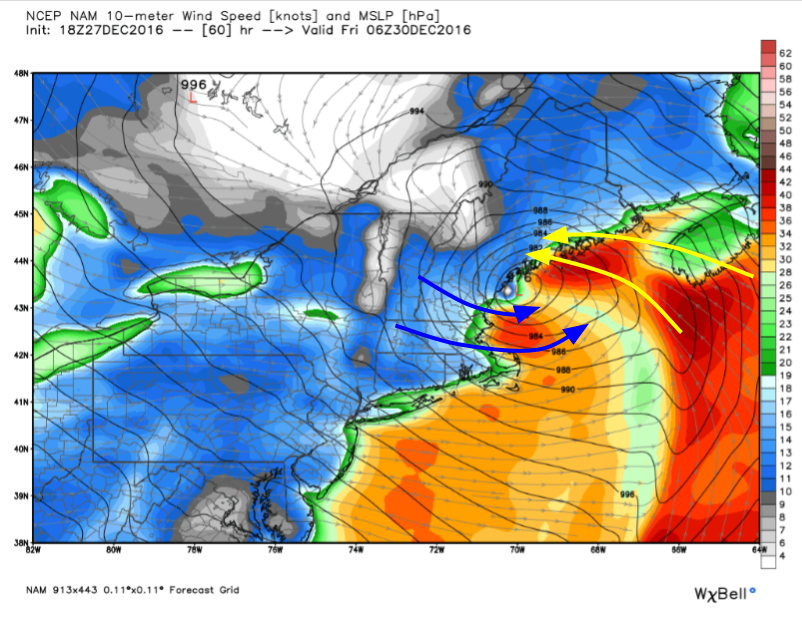
NAM Model Showing Two Rounds Of Strong Winds Thursday Night. Image Credit: Weatherbell

Besides the heavy precip, the other big story with this storm will be the wind. There will be two rounds of very strong winds, one on the front side of the storm and one on  the back side. On the front side, winds will be out of the ESE along the coast with gusts to 60mph possible along the midcoast. Gusts to 50-55 mph are likely in the Portland area and points along the coast SW of that. On the back side, winds will flip to the west and begin blasting at similar speeds. While the front side winds will be mostly a coastal issue, the westerlies on the back side will impact everyone.

12Z NAM Showing Two Blasts Of Wind Along The Coast Thursday Night

Here’s another visualization of the winds at a single point (Rockland) through time. Much like a hurricane, there will be front side winds, a calm period as the center of the storm passes overhead, and then back side winds. Winds will not be of hurricane strength though a gust to hurricane force can’t be ruled out offshore and possibly at an exposed Midcoast point. These winds will definitely be strong enough to knock down trees and power lines especially those anchored in soggy ground (midcoast) or those weighed down by heavy snow (inland). With colder air moving in behind this storm, it will be important to be prepared for a night or two in the cold should your power go out.

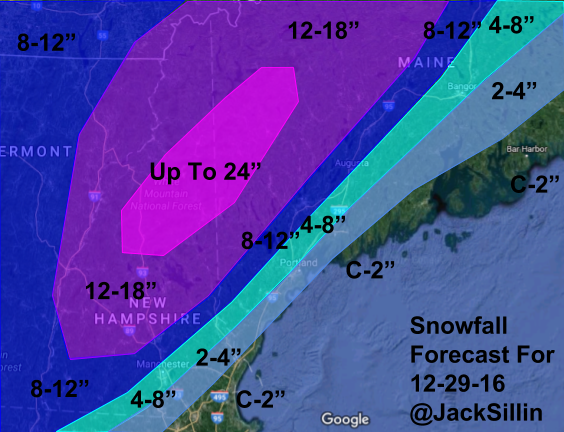
Snowfall Forecast
Snowfall Forecast

Here’s the latest snowfall forecast. The main adjustment was to trim back totals a bit near the coast as guidance has shifted towards a warmer solution. The bullseye of around 2 feet in the Whites/Mahoosics still looks good. The area with the sharpest gradient (near the coast) still has a bit of uncertainty attached as some guidance still wants to hang onto a colder solution. This will be watched and any adjustments needed made tomorrow.

To summarize: snow will arrive from SW to NE midday tomorrow and will change to rain along the coast tomorrow evening. Heavy snow and rain will arrive tomorrow evening and last through tomorrow night with whiteouts possible in areas of heavy snow. Thunder will also be possible as dry air moves in aloft and instability is created with warmer and moister air near the surface. Winds will be strongest along the coast and will blast the area in two parts. The first will be along the coast with ESE winds gusting up to 60mph. The second will be enjoyed by everyone with WNW winds gusting up to 50mph. These winds will be strong enough for power outage concerns.

No coastal flooding concerns are expected as tides are astronomically low though a few instances of minor splashover are possible along the midcoast where onshore flow will be strongest.

The pattern doesn’t stop here, more snow is in the forecast for New Year’s Eve night and mixed precipitation may threaten to begin the first week of 2017. I will have an update on those storm threats later this evening or tomorrow.

-Jack
 

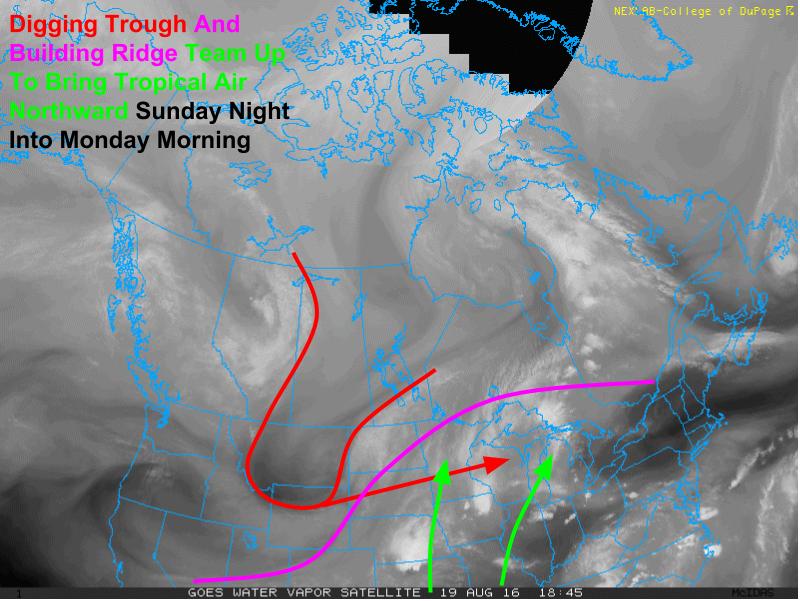
First Fall Like Front Of The Season To Bring Heavy Rains Sunday Night

Hello everyone!

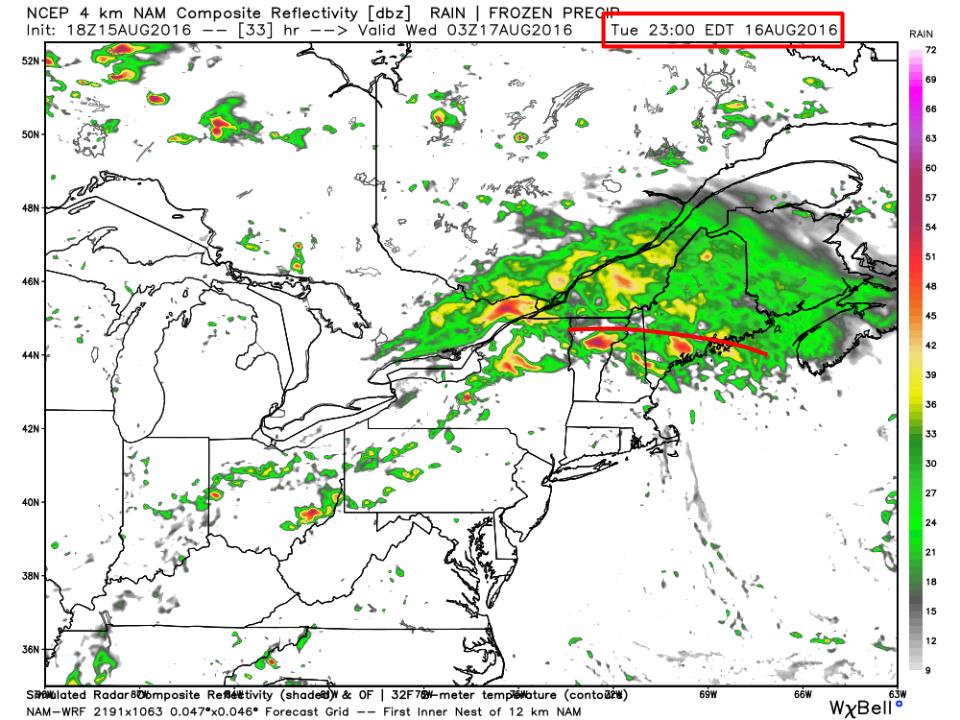
It’s beginning to look a lot like fall in terms of the weather pattern. A strong upper level disturbance is digging south into the northern Plains states and ahead of it seasonably strong low pressure will develop driving a fairly strong cold front into the area Sunday night into Monday morning. During this time, showers and a few storms are likely to drop some beneficial rains. Cool, dry, awesomely comfortable air will settle in as strong high pressure builds overhead for Tuesday through Thursday. After Thursday, the high moves offshore and an approaching front will bring more warm air into the region before more showers and storms at some point next weekend.

3:00 PM Observations Verifying Today's Forecast
3:00 PM Observations Verifying Today’s Forecast

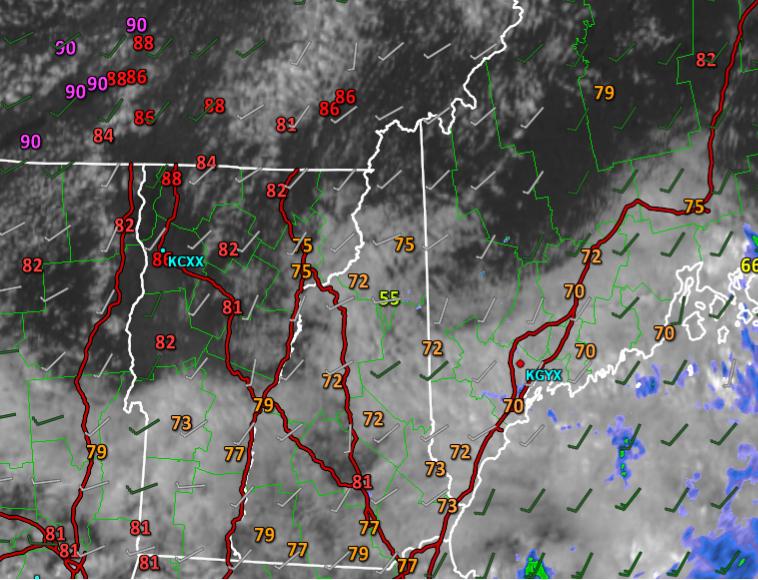
Today’s forecast worked out well with dry conditions, sunny skies, and light NW breezes. A sea breeze has developed along the coast bringing slightly cooler temps there. Temps are currently ranging from the mid 70’s north to the mid/upper 80’s south which is right in line with the forecast. This is one of those straightforward days where not a whole lot can/did go wrong in terms of the forecast. Days like this are a rarity in Maine!

Current WV Satellite Showing The Upper Air Players On The Field This Afternoon. Image Credit: Weatherbell
Current WV Satellite Showing The Upper Air Players On The Field This Afternoon. Image Credit: COD

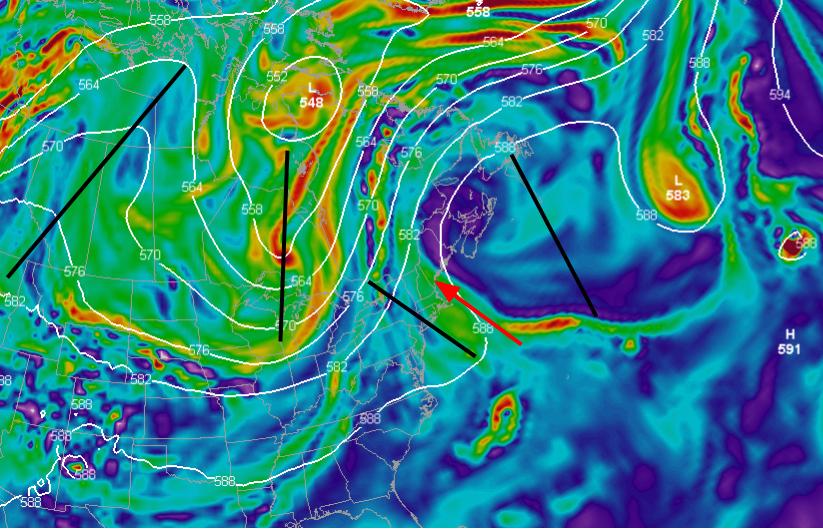
The upper air setup looks a lot like fall with a deep trough beginning to evolve to our west. This trough will continue to strengthen and begin to tilt negatively as it moves east. Ahead of the trough, a ridge will build, slowing the eastern progress of the trough. This ridge does not look as strong as once modeled and thus the front is likely to keep moving a little faster than it looked a couple of days ago. Regardless of speed, a line of tropical downpours is likely ahead of the front. The heaviest rain will be over northern areas where better upper level dynamics are likely.

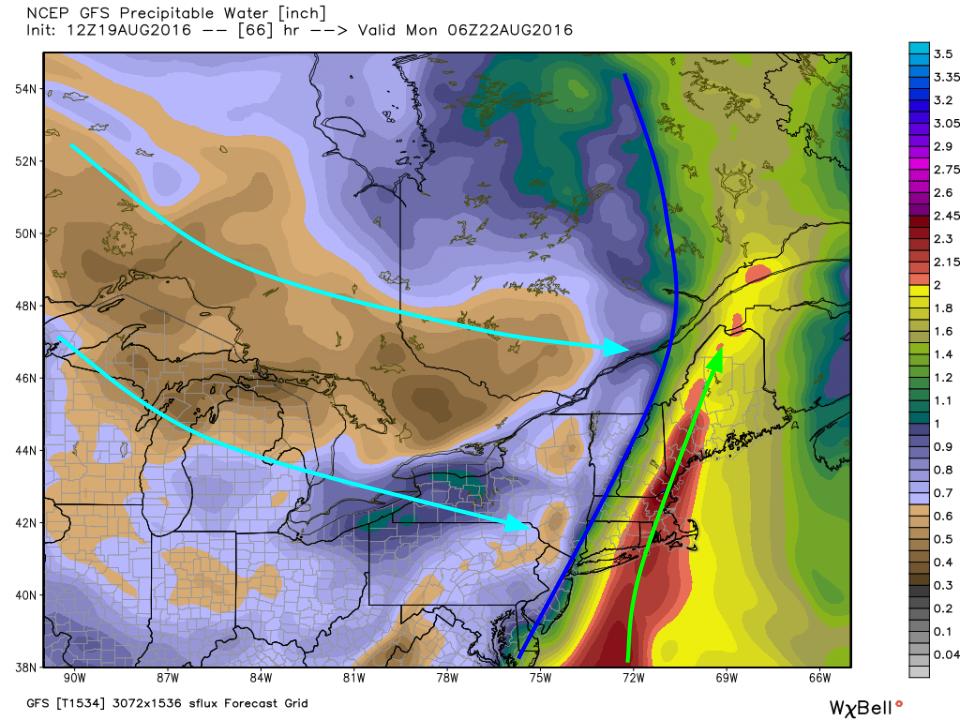
12Z GFS Showing Tropical Moisture Streaming North And Dry Canadian Air Streaming South Sunday Night. Image Credit: Weatherbell

The weather for the next several days can be seen in this map of moisture from the GFS. Increasing clouds and moisture ahead of the front tomorrow and to a larger degree Sunday will result in lower temps but dew points will be on the rise leading to more humidity. That humidity will fuel tropical downpours along the front before dry Canadian air sweeps south bringing comfortable humidity back. How do dew points in the 40’s sound? Yeah, that’s happening Tuesday and Wednesday.

12Z GFS Showing A Warming Trend Heading Into Next Weekend. Image Credit: Weatherbell

The significant heat relief will be short lived as SW breezes bring warmer and more humid conditions into the region late next week. A frontal boundary will sag south during this time crossing the area at some point this weekend with more showers and storms possible. The timing of this remains uncertain. While temps and dew points will be higher than Tuesday and Wednesday, they still don’t look oppressive. The true dog days of summer may be numbered.

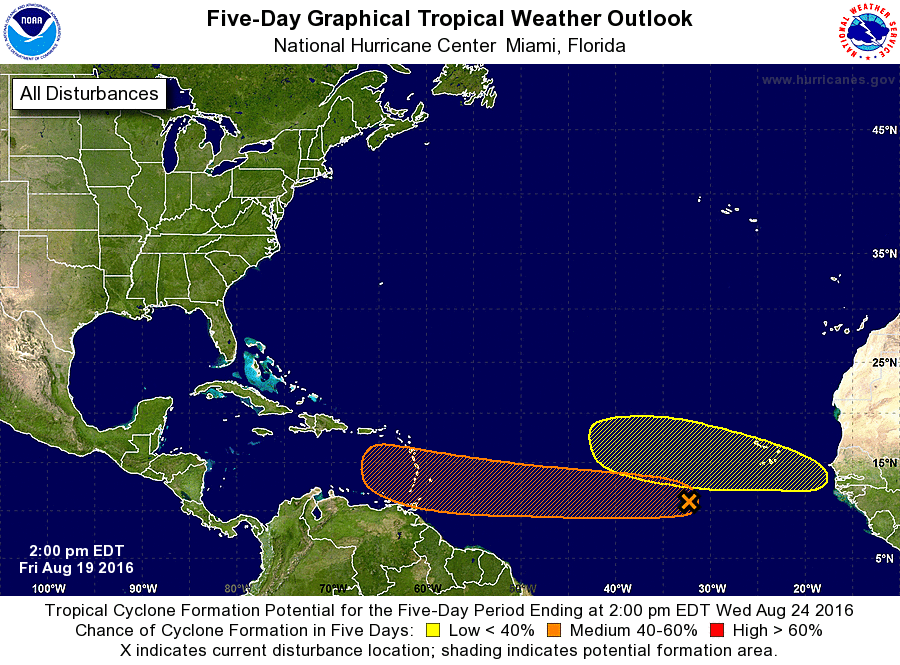
2PM NHC Tropical Weather Outlook. Credit: NHC

I want to end with a quick note on the tropics. There is a cluster of thunderstorms over the open ocean roughly half way between the Caribbean and Africa. Some computer model guidance has indicated that this cluster will evolve into a tropical storm that could threaten the US. It is important to note that this tropical storm that some models predict hasn’t formed yet. This means that the models are having a hard time figuring out what it is right now (models don’t often “see” thunderstorms as they actually are because thunderstorms are almost always too small for the model’s grid points). The pattern is favorable for this cluster of storms to develop gradually and the NHC has given it a 50% chance to develop in the next 5 days.

Computer Model Spaghetti Plot Showing Considerable Uncertainty In Track After A Couple Days. Image Credit: Weatherbell

This does not mean that the computer model maps showing a large hurricane over *insert US city here* have any merit. If you are taking a vacation to Puerto Rico, Barbados, or any of the other eastern Caribbean islands in the next week, keep an eye on this system. Otherwise, this is not something to worry about. Should that change as the system moves west, I’ll be sure to let you know. Please don’t fall for model hype that can be found on social media. As always, continue to keep tabs on the forecast through the official NWS channels such as the National Hurricane Center and the local NWS office in Gray.

More info tomorrow.

-Jack

More Beneficial Rain This Week

Hello everyone!

After a weekend of on and off storms and heavy rain, we finally got a break from the heat, humidity, and storms today. Enjoy the drier air while it lasts because it won’t last long. Warm, sticky air will again flood the region tomorrow as a warm front tries to drive north. After heavy rain for many tomorrow evening, rain will become lighter and more scattered for the rest of this week with more dry hours than wet. That changes by this upcoming weekend when a deep trough to our west will bring more tropical moisture and accordingly more heavy rain.

5:00 PM Observations Verifying Today's Forecast
5:00 PM Observations Verifying Today’s Forecast

Today’s forecast worked out fairly well with the exception of cloud cover. In typical upslope/downslope situations, the clouds would reside over the mountains while the sun would be over the southern part of the area. Today, however, warm air advection aloft brought clouds to the south while the atmosphere dried out so much (and was still so warm aloft) that no widespread clouds were observed over northern areas. The cloud cover aside, everyone stayed dry as forecast and forecast temps panned out well with mid/upper 70’s north and low to mid 80’s south. Overall, not a disaster, but as always, it could’ve been better.

12Z GFS Showing The Upper Level Setup Tomorrow Evening

Tomorrow will feature the return of tropical moisture to the area as a disturbance passes through Northern VT and into Northern ME. A low pressure system will move right through the middle of the area tomorrow as well. This means that SW winds aloft and at the surface will again bring tropical moisture to the area. Tomorrow’s forecast will be basically split up into three parts, the delineation between them being location. The first part will be fairly heavy, fairly steady rain across the north.

12Z GFS Showing Tropical Moisture To Fuel Heavy Rains Tomorrow. Credit: Weatherbell

Tropical moisture will once again be present across the region by tomorrow afternoon and evening and Precipitable Water values will be running near or over 2″ which is about as loaded as it gets here in Maine in terms of tropical moisture. Low pressure will pass right through the middle of the area leaving the northern part of the area to the north and eventually north west of the low. This is where steady precip is most likely, The tropical moisture will encounter some residual low level cool air leftover from today’s airmass and rise, cool, and condense, causing rain. Areas mainly north of route 2 could see 1-3″ of rain from this event.

12Z 4km NAM Showing One Idea As To How The Storm Could Play Out Tomorrow. Image Credit: Weatherbell

The middle part of the area, north of a Portland/Hanover NH line, but south of route 2, will see more scattered showers and possibly a storm or two. This is the area through which the low itself will track which means that it will be missing both the instability from the warm sector south of the low, and the forcing for steady rain north of the low. This area will see the least amount of precip overall because it is neither here nor there so to speak. The precip for this middle stripe will range from a quarter to a half inch and will come from showers and storms that form farther south tracking NE.

12Z GFS Showing More Than Enough Shear For Severe Potential Tomorrow. Credit: Accuweather

Southern areas, south of that Portland/Hanover NH line, will see showers and storms with torrential rains and also with some limited severe potential. The nearby low, strong upper level disturbance, and warm front/cold front combo will provide the trigger. Strong shear associated with the developing low (pictured above) will provide the organizer, but the big question will, as per the norm here in Maine, be instability which, right now, looks limited at best. Due to the lack of instability and the presence of an inversion aloft which will help keep strong winds high in the sky, the severe threat looks limited. That being said, the SPC has this southern area in a marginal risk for severe weather and a stray strong wind gust can’t be ruled out. This severe threat will be least small overnight Tuesday into early Wednesday morning. Some scattered showers and possibly a stray storm is possible Wednesday morning before afternoon drying and clearing. Southern areas will see rainfall amounts vary widely depending on exactly where storms set up going into the evening hours. Some places could see over 1-2″ if storms train over a specific location while it is possible others struggle to see even a quarter of an inch of rain. There is no way of knowing exactly where storms will set up this far in advance.

Highs Tuesday look to remain cooler as clouds and showers overspread the area from west to east. Look for temps largely in the 70’s with a few low 80’s possible in SW NH.

Thursday and Friday at least look warm but not hot with some scattered showers in the afternoon but no organized rain. By the beginning of next weekend, however, a deep trough will be present over the Central US with deep S/SE flow from the tropics over our area out ahead of it.

12Z GFS Showing The Pattern For Our Next Rain Threat This Coming Weekend

There are several important factors for next weekend’s rainfall potential. The pattern looks a lot like last winter’s with a big trough just to our west flanked by large blocking ridges. Warm S/SE flow ahead of the trough looks to bring another threat for heavy rain, just like it did so many times last winter. At this point, all that seems clear is that another heavy rain threat exists and must be watched between 6 and 8 days from now. The pattern supports it as does all available guidance that I’ve seen. Specifics are still uncertain at this point but they will become less so as the week goes on. I’ll have more updates as those details become clearer.

Following that heavy rain threat, more significant heat relief seems likely as we look to move into the third and fourth weeks of August.

One last note, this Wednesday (8/17) at 6:30 PM, I will be giving a presentation at the Freeport Community Library where I will discuss me and my background, some of the quirks of Maine weather, how to be a better informed consumer of weather information, and finally what you can do to help meteorologists make better forecasts. For more details, click on over to the FB event page that the folks at the Freeport Library created. I hope to see you there!

-Jack

Strong To Severe Storms Possible Tomorrow

Hello everyone!

Unfortunately I don’t have a ton of time for a full update this evening so I’ll save analysis of this weekend’s rain threat for tomorrow morning’s post. In this post I’ll look at tomorrow’s severe weather threat.

Current (6:00 PM) Obs Verifying Today's Forecast
Current (6:00 PM) Obs Verifying Today’s Forecast

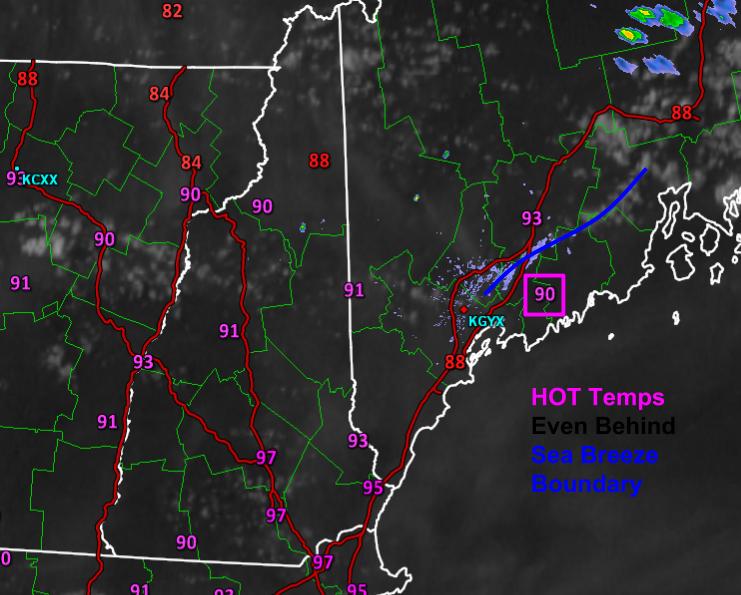
Today’s forecast worked out pretty well. Mostly sunny skies were reported across the area with only some high thin clouds to make a feeble attempt at blocking the sun. Temps soared as forecast into the 90’s almost everywhere. Even behind the sea breeze front, temps were near or over 90. Dew points dropped slightly, as forecast, as the atmosphere mixed out but it still felt quite stifling. Ready to do it again tomorrow except with even more humidity?

12Z GFS Showing The Plume Of Tropical Moisture Pointed Right At Us Tomorrow.

The plume of tropical moisture, believe it or not, was sitting just to our south today. The humidity you felt was mostly due to yesterday’s rain. Tomorrow, however, the full force of the tropical airmass will be pointed right at us and dew points will soar into the 70’s and stay there right on through the day (there is simply too much moisture in the air tomorrow to mix out like today). Meanwhile, a cold front will be approaching from the NW and an upper level disturbance will be moving into the area from the west (right black line on W edge of blue). The front and the disturbance will act as a trigger for some storms tomorrow. See those PWATs >2″ (blue colors) over coastal areas? Those PWATs, 3 standard deviations above the mean and in some cases never before seen in GEFS climatology, will provide plenty of fuel for downpours. Will there be any fuel for other severe weather? Absolutely.

12Z 4km NAM Showing Plenty Of Fuel For Storms Tomorrow. Image Credit: Weatherbell

As temps soar into the 90’s again tomorrow, the atmosphere will become quite unstable. CAPE values in excess of 1,500 j/kg will support strong storms, some of which could be strong enough for gusty winds. The atmosphere looks far too warm for significant hail but as a result of all the moisture, the atmosphere will be primed for a tornado or two. They look weak at this point but be prepared to seek shelter if you do come under a tornado warning. Also have a plan to be notified of that tornado warning if it’s issued for your area. Again, this is by no means a tornado ‘outbreak’ but one or two spinups are possible.

12Z GFS Showing Sufficient Shear For Storm Organization. Image Credit: Accuweather

The final ingredient, the organizer, looks not fantastic but good enough for at least some severe storms. 0-6km shear between 20 and 40 knots isn’t fantastic but it does raise the isolated severe storm red flag. The most important thing to note about tomorrow’s storm setup is that the biggest threats will not be gusty winds or hail or tornadoes. The biggest threat will be intense lightning and very heavy rain that could lead to flash flooding. It’s been so dry that the soil has ‘forgotten’ so to speak how to absorb moisture. This means that any heavy rain that suddenly falls will run right off and into the nearest road/ditch, some of which won’t be able to handle the large volume of water at once. Remember, turn around don’t drown and when thunder roars, go indoors.

I’ll be back tomorrow morning with a full update on both the severe weather threat and the heavy rain threat this weekend.

-Jack

Heavy Rain Possible This Weekend Following Oppressive Heat Tomorrow

Hello everyone

Current Conditions This Afternoon (4:30 PM) Verifying Today's Forecast
Current Conditions This Afternoon (4:30 PM) Verifying Today’s Forecast

This morning’s showers are now well offshore as an upper level disturbance rotates eastward. Looking at the forecast verification, temps worked out fairly well with widespread 70’s under cloudy skies. Some 80’s were reported in SW NH as expected. I didn’t think clouds would clear out enough in the far north for 80’s but by the looks of obs across SE Quebec, some warmer temps likely found their way into those areas. This morning’s showers evolved as forecast but so far no storms have been reported in NE areas though some leftover convection from Quebec could still find its way in later this evening. Overall, today was a pretty good forecast.

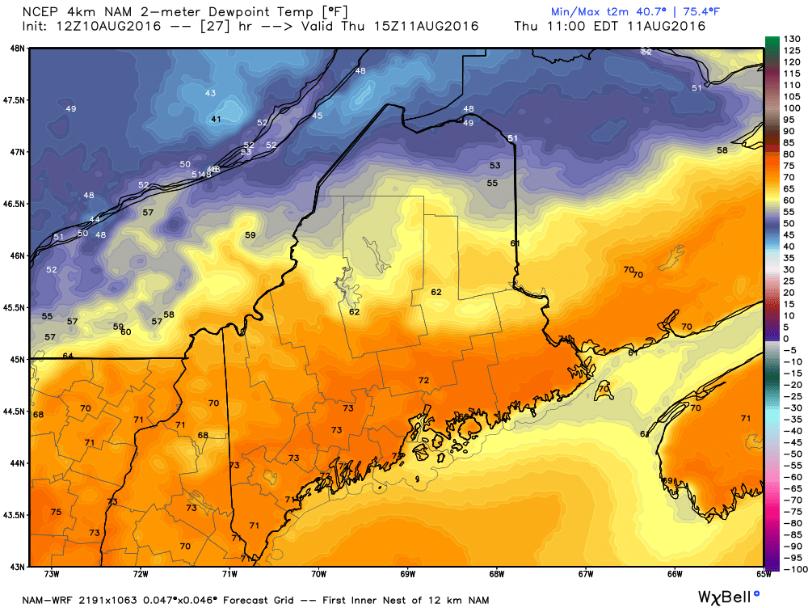
4km NAM Showing Oppressive Dew Points Tomorrow. Image Credit: Weatherbell

Tomorrow will begin a two-day sufferfest as we sit to the south of a frontal boundary. Look for highs to climb into the low to mid 90’s for most SW areas with upper 80’s elsewhere. SW winds will keep any sea breeze attempts at bay. Humidity will be the big story with dew points rising into the low 70’s for most with some upper 60’s north and east. The heat and humidity will combine to offer up heat index values near or over 100. Heat advisories are up for SW NH and York County ME due to this dangerous heat.

12Z 4km NAM Showing Widely Scattered Showers Possible Tomorrow. Image Credit: Weatherbell

While there is no organized trigger for showers or storms tomorrow, there will be plenty of moisture around and as a result, even the differences in heating of the mountains could be enough to trigger a spot shower or two tomorrow afternoon. Again, this does not look widespread by any means but don’t be surprised to see a few drops if you’re out and about in the mountains. Most of the area looks to bake under the hot sun with no relief from clouds or precip.

12Z 4km NAM Showing More Dangerous Heat Friday. Image Credit: Weatherbell

More dangerous heat is on tap for Friday as we continue to sit south of the front. Temps are likely to be only slightly cooler than Thursday but dew points are likely to soar even higher. Temps in the low to mid 90’s combined with dew points in the 70’s will result in heat indexes exceeding 100 for much of the SW portion of the area. This is astronomical for Northern New England and nothing to take lightly. Be sure to take proper precautions such as hydration and limiting outside activity during the hottest part of the day. By evening, storms will be rumbling into the area from the NW and will begin to bring relief along with heavy rain, gusty winds, and frequent lightning.

12Z GFS Showing Sufficient Shear For Severe Storms Friday. Image Credit: Accuweather

The hot temps and oppressive humidity will result in a very unstable atmosphere Friday. Remember the three severe weather ingredients? We will have plenty of fuel. The approaching cold front will be our trigger and indications are that there will be more than enough shear to organize storms. This means that there is a threat for severe storms tomorrow with gusty winds being the main threat. This threat is greatest in the mountains where the front will be closer during peak daytime heating.

Current Water Vapor Satellite Showing All The Players For The Weekend Rain Event. Image Credit: COD Nexlab

The pattern change I’ve been talking about for almost a week is finally here. A strong area of high pressure is setting up over the Western Atlantic as a trough is digging into the Western US. The SW flow on the periphery of the high and on the eastern side of the trough is directing a pool of tropical moisture associated with the tropical disturbance over Florida our way. Meanwhile, a powerful storm over Hudson Bay is pushing a cold front SE. Energy will eject from the Western trough and move east combining with the front and the moisture to bring rounds of showers and storms beginning Friday evening and wrapping up Monday.

12Z GFS Showing The Pattern For The Weekend

I show the GFS 500mb vorticity (energy) and SLP map as it gives a general overview of what the pattern will be like from Friday evening through Monday morning. A front will be stalled overhead with several disturbances aloft and waves of low pressure at the surface promoting heavy rainfall. A final upper level disturbance and associated surface low will move east Monday bringing a final round of heavy rain. The exact location of this rain is still a bit up in the air. Some guidance suggests it will be right over us while some suggest we only see the far northern fringes of it. Those details should come into more clarity as that part of the event draws closer.

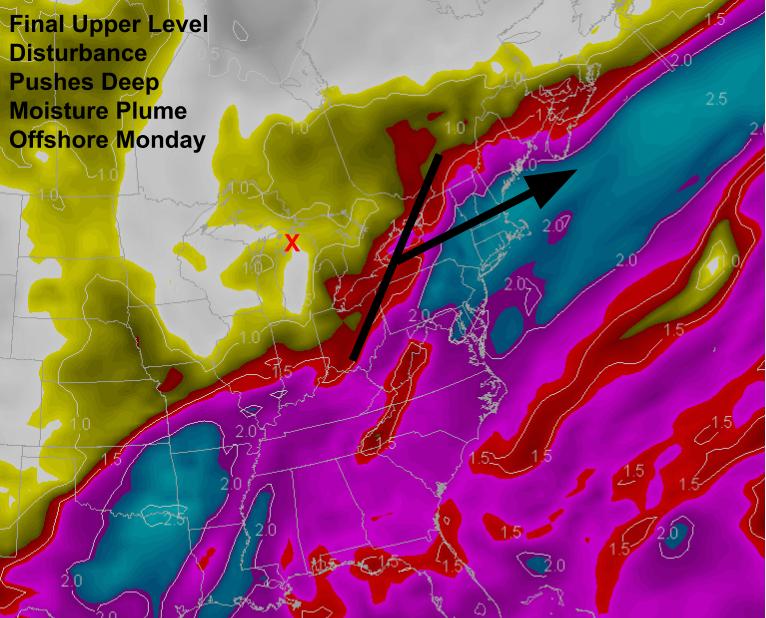
12Z GFS Showing The Moisture Plume Being Forced Offshore Monday

The front will continue to provide the focus for showers Sunday before the whole Western trough swings through with one final round of heavy rain Sunday night into Monday morning. This round is the most uncertain as there are some indications that it will primarily impact Southern New England leaving us dry. After this round passes out to sea, either via us or SNE, drier air looks to move in for the beginning of next week.

12Z GFS With This Week's Overview
12Z GFS With This Week’s Overview

The trend for this week will be a stifling start tomorrow and Friday before clouds and showers bring gradual cooling through the beginning of next week. Rounds of showers and storms could be heavy at times with flash flooding possible. Each round of rain will remove some moisture from the atmosphere so that by the beginning of next week we are left with a fairly dry and comfortable airmass. The pattern supports more rain by the middle or latter part of next week but there are no significant signals for a specific event yet.

I will have another update tomorrow morning. As a reminder, I will be gone from Friday afternoon through Sunday afternoon. I will post Friday morning but not again until Monday morning (there is the low potential I will return in time for a post Sunday evening but alas that depends on the weather). During this time, please revert to your primary source for weather information, such as the NWS or local media.

-Jack


Thunderstorms And Heavy Rain As We Head Into The Weekend

Hello everyone!

We have two interesting weather systems coming our way in the next few days. The first will be a cold front dropping south out of Canada tomorrow afternoon. It will bring with it the threat for showers and storms tomorrow afternoon and into the evening. No severe weather is expected. That front will lose steam and stall somewhere just to our south Friday morning at which point a wave of low pressure will try to develop and move NE along the front. Where that low tracks and how strong it is will determine the outcome of our second weather event and how much beneficial rain we receive. Quieter weather is expected to follow that event with mild temps and sunny skies expected into next week.

Thursday Storms

Screenshot_133
12Z GFS Showing Some Instability Present Tomorrow Afternoon. Image Credit: Weatherbell

Let’s do a quick rundown of the three ingredients needed for strong/severe storms. Doing this will explain why some storms are likely but also why severe storms are not. Instability is a go as temps soar into the 80’s and low 90’s while dew points climb as well, into the upper 60’s to low 70’s. Nothing incredible, but certainly enough for some booms.

12Z NAM And GFS Both Showing Upper Level Energy And A Surface Cold Front To Trigger Storms.

How about a trigger? An upper level disturbance will be pinwheeling around the base of an upper low over Eastern Canada tomorrow. Meanwhile, a surface cold front will be sagging south across the region tomorrow. Both of these are shown in the image above with the left two panels representing one model forecast and the left two representing another. While there are some differences, the general idea remains the same. The general idea is that there will be enough of a trigger to get at least a few storms going. The big question then becomes, will they become organized enough to produce severe weather?

12Z NAM Showing Very Little Shear To Organize Storms. Image Credit: Accuweather

The short answer to that question is no. While guidance indicates some marginal shear, perhaps enough to trigger an isolated severe storm, there is not enough shear to support widespread severe weather. This means that you can expect your typical garden variety thunderstorms tomorrow with heavy rain, frequent lightning, and possibly some gusty winds. Remember, storms don’t have to be severe to be dangerous. Lightning can strike up to 15 miles from a storm and is just as dangerous as strong winds or large hail. When thunder roars, go indoors.

12Z 4kNAM Showing Scattered Storms Tomorrow Afternoon. Image Credit: Weatherbell

Putting that all together, here’s the big picture for tomorrow afternoon/evening. Scattered storms look to develop in the early afternoon over the mountains and will slowly move SE through the afternoon and into the evening hours before reaching the coast in a weakened state later in the evening. Storms are most likely in the mountains and least likely along the coast and especially along the midcoast.

Friday Rain

12Z GFS Showing The Setup Leading To Possible Rain Friday. Image Credit: Weatherbell

Tomorrow’s cold front will stall just off the coast Friday morning and a low pressure area will develop along its southern end over the Mid Atlantic states. The GFS shows this situation well with the map shown depicting conditions at 8:00 Friday morning. Scattered showers are possible during this time but steady rain, if it happens, is likely to occur Friday afternoon/evening. There is still quite a bit of uncertainty in the forecast for Friday as guidance offers several different possibilities. There are two scenarios, the dry scenario, and the wet scenario. I break each down below along with which I think is more likely.

A Comparison Of The 12Z NAM (Right Panels, Wet Solution) And The 12Z GFS (Left Panels, Dry Solution).
A Comparison Of The 12Z NAM (Right Panels, Wet Solution) And The 12Z GFS (Left Panels, Dry Solution). Click To Enlarge.

The NAM and GFS models from this afternoon present the two more extreme solutions: almost no rain on the GFS and tons of rain on the NAM. The map above is data-rich and small, so click it to enlarge it so you can see all the details, if you want. The main difference between the models revolves around the amount of upper level energy in the atmosphere and where that energy is located. The NAM has way more energy (lots of red, top right panel) while the GFS has very little (thin stripe of red, top left panel). Also of note is the location of the kicker disturbance. The software I use to get the data for these graphics makes any boundaries very hard to see so I highlighted New England as well as the Quebec/Ontario border to show the differences in location of the kicker disturbance. Notice that the NAM has it farther west, closer to the border while the GFS has it well east of the border. Keep in mind these maps are valid at the same time. By keeping the kicker farther west, the NAM allows for more moisture to stream northward and also gives the low more time to strengthen, bringing more rain. The GFS on the other hand hurries the kicker along, pushing the storm and the moisture offshore quickly.

12Z NAM (Right) vs 12Z GFS (Left) Both Showing Available Moisture (PWAT)

The difference in moisture can be seen in the Precipitable Water maps which show how much moisture is available. Notice how the blue (super moisture laden air) is much more abundant and closer to the coast on the NAM (right) compared to the GFS (left). Also notice that on both models, SE MA gets in on the action. Heavy rain is likely there but rain chances become more uncertain as you head NW. Notice also how the mountains are in fairly dry air (brown/yellow). Very little rain is expected there. The battleground so to speak will be those areas in between the SE MA coast and the ME/NH mountains.

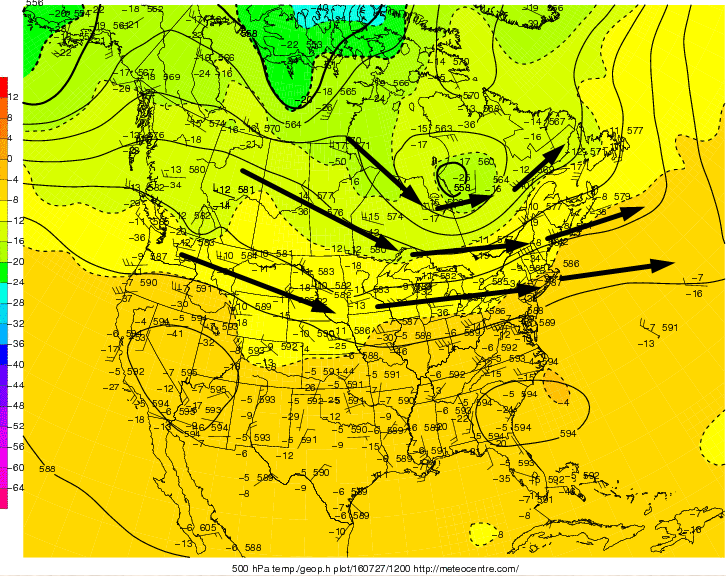
Current (12Z Today) Upper Air (500mb) Analysis. Image Credit: Meteocentre

What do I think will happen? Right now I am leaning towards the GFS’s scenario because the larger scale pattern supports it. This morning’s upper air map shows this well. Winds in the upper atmosphere are overwhelmingly west-east over North America with only shallow ridges and troughs. This “zonal” pattern does not lend itself to troughs digging and amplifying which is what the NAM depicts. Right now, the WNW flow around the heat dome over the SW US looks likely to simply shove the fledgling low off the coast, leaving us with just a few showers or perhaps a brief period of steady rain. SE MA is likely to see the steadiest and heaviest rain with showers making their way all the way up to the base of the mountains. The mountains are likely to stay mostly dry as they are simply too far removed from the deep moisture to our SE. I’ll have more on this tomorrow along with updates on the thunderstorm threat.

Quieter weather is expected through much of next week.

-Jack

More Strong To Severe Storms Possible Today

Hello everyone!

Today will feature slightly cooler temps, less humidity, and another chance for strong/severe thunderstorms. The thunderstorm threat will develop later this morning and continue through the early evening hours. Storms are more likely in SW areas where more energy will be available aloft. While most of the storms are not likely to become severe, some of the stronger cells do have the potential to mix down some strong wind gusts and perhaps some small hail. Frequent lightning and heavy rain are the main threats. Highs will range through the 80’s with dew points in the 60’s which is still warm and certainly not dry but far better than yesterday.

WV Imagery Showing A Disturbance Dropping SE This Morning. Image Credit: SSEC

A vigorous disturbance is currently located north of the Great Lakes and is forecast to drop SE and intensify, arriving in our area bu sunset. Storms will form out ahead of it late this morning/early this afternoon. When I talk about forecasting thunderstorms, I talk about the trigger, the organizer, and the fuel. This disturbance will be the trigger for today’s storms.

40-50 Knots Of Deep Layer Shear Will Organize Storms Into Small Clusters Capable Of Some Damaging Wind Gusts. Image Credit: SPC

A band of strong winds and powerful shear will rotate around the disturbance today. The strongest winds will be pointing at Southern New England while Northern Maine sits in the calm aloft associated with the disturbance being to their south. In southern Maine/New Hampshire, we’re a bit on the edge. We likely see enough shear to get some small clusters but large squall lines are unlikely. If that disturbance can intensify enough fast enough, it could pull some of those winds north and we could see a bit more action. If it remains a little weaker, those winds will continue screaming towards SNE. These winds will be our organizer.

Hi-Res NAM Showing Modest Instability With More Unstable Air Moving In From The West. Image Credit: Weatherbell

The biggest question today is how unstable the air will be. A cold front moved through last night (remember those storms?). That front has moved offshore and has taken the extremely soupy/unstable air with it. We are left with marginal moisture and several areas of clouds to limit surface heating. Model guidance suggests that more unstable air will try to filter in from the west later today but I have to wonder if that will make it in time. Also of note with regard to instability is wind direction. Westerly winds don’t exactly bring in the warm moist air you need for big storms. Regardless, we do still have leftover moisture and dew points remain in the 60’s which is sufficient for at least some storms. Also, wide swaths of clear skies this morning support some solid surface heating which will bring temps up into the 80’s, also plenty sufficient for storms.

All that to say, ingredients are at least sufficient for some storms, a few of which could be severe with strong winds and small hail. However, I do have doubts as to how unstable the atmosphere is. Also, we don’t have optimal winds aloft for organizing storms into lines capable of widespread wind damage. While organized severe storms are not forecast, still do keep an eye to the sky today and be prepared to duck inside for a few minutes if you plan on heading outside.

More storms are possible Monday and Thursday with two more cold fronts.

-Jack