Tag Archives: summer. maine

Mid Day Severe Storm Analysis

Hello everyone!

I have a quick break between Beach to Beacon this morning (awesome!) and heading north to Katahdin tonight so I figured I’d sneak in an update to bring you up to speed on how things look for severe storms today as well as a more detailed look at tomorrow’s forecast as I will be up and hiking early, thus unable to post.

1:15 PM Radar And Satellite

I’ll start out with the short forecast for those who just want to know what the weather will be. The why behind the what will be explained in full detail below. Temps are on track to rise into the mid to upper 80’s for most with low to mid 80’s along the island and peninsulas. Some low 80’s are also likely across far northern areas where some thunderstorms have already gone through. Showers and storms move through over the next several hours from NW to SE. The main threats from these storms will be strong winds, heavy rain, and lightning. Remember, when thunder roars, go indoors!

A dry and mild night is in the cards tonight with temps sinking into the upper 50’s north and low to mid 60’s south. For tomorrow, mainly sunny skies are expected with dry and cool NW winds keeping temps right around 80 region wide with noticeably less humidity. An isolated shower or storm is possible in far NE areas but nothing significant is forecast and most folks will be staying dry.

Now for the why behind the what. What are the factors driving thunderstorms today? What will the rest of the afternoon look like and why? How about tomorrow? To answer those questions, we’re going to get to take a little bit of a deeper dive into the world of weather.
Screenshot_206
Surface Analysis. All Maps Valid At 12 Noon Unless Otherwise Stated. All Image Credit Goes To The SPC Mesoanalysis Page Unless Otherwise Stated.

A prefrontal trough moved through the area this morning and is now producing showers over NE MA and the Gulf of Maine. The actual front is draped across NY and the St Lawrence valley which is fairly significantly west of where most guidance had it for this time. This was an idea I forecasted in last night’s discussion. Storms are beginning to fire across the mountains as forecast while a lone cell travels across Central Maine towards Augusta. The front will continue to move slowly to the east this evening and storms will continue to fire out ahead of it. When discussing thunderstorms, I always talk about three things: the trigger, the fuel, and the organizer. How are we doing in each category this afternoon?

WV Imagery Showing Both Today's Disturbance And Tomorrow's. Image Credit: COD Nexlab
WV Imagery Showing Both Today’s Disturbance And Tomorrow’s. Image Credit: COD Nexlab

The trigger at the surface is the cold front pictured in the surface analysis above and the trigger aloft is a shortwave over Quebec (orange line) which will be moving ESE through the area this evening. Tomorrow’s disturbance is farther west, just south of Hudson Bay. A 90kt+ jet streak (not pictured) is currently just north of the area and will also be sagging SE as the afternoon goes on. In short: we have plenty of trigger. How about fuel?
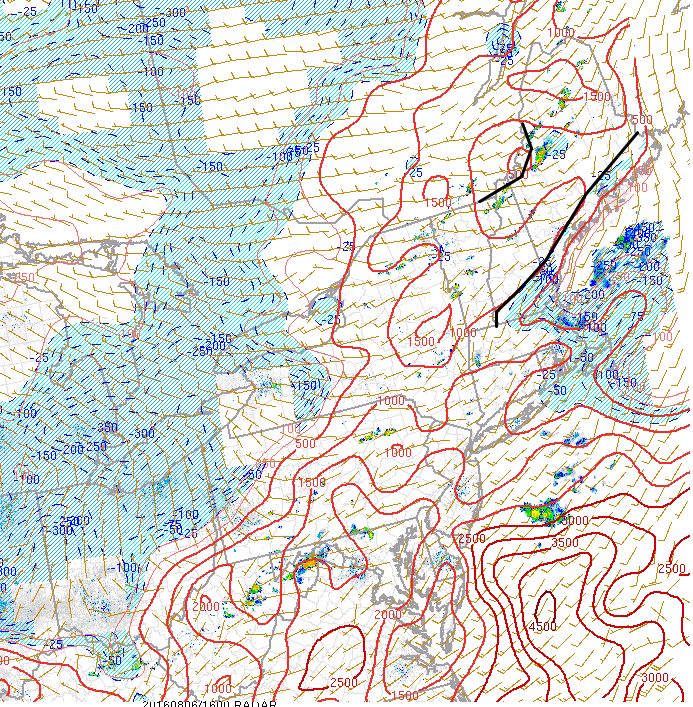
Surface Based CAPE Showing Modest Instability

Most of the area is currently seeing about 1,000 j/kg of CAPE with the exceptions being the immediate coast (due to cloud cover and some weak marine influence) and far NW areas (due to earlier convection using up some of the fuel). One important thing to notice is the unstable air even farther to the NW over SE Quebec. That will translate ESE with the whole system this afternoon and will keep NW areas in the mix as far as storms go. The days long debate as to unstable or not has been more or less resolved and there appears to be enough instability to sustain some storms. However, that being said, instability is still modest/marginal. There does not appear to be quite enough for widespread severe storms. The result will be scattered/isolated severe storms with mainly sub-severe storms as well as showers. The lack of deep instability will also impact storm coverage which will be scattered as opposed to widespread.
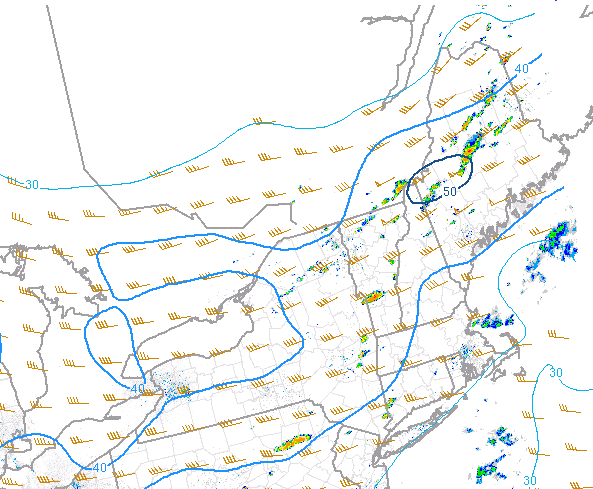
0-6km Wind Shear
0-6km Wind Shear

The final piece of the puzzle is the organizer. Will storms have enough shear to get organized enough so that they are capable of damaging winds? 0-6km shear is currently in excess of 40kts across the entire area with some parts seeing shear in excess of 50kts. This amount of shear is more than enough to organize some strong storms. We have our trigger, our fuel, and our organizer which means we are a go for strong storms this afternoon.
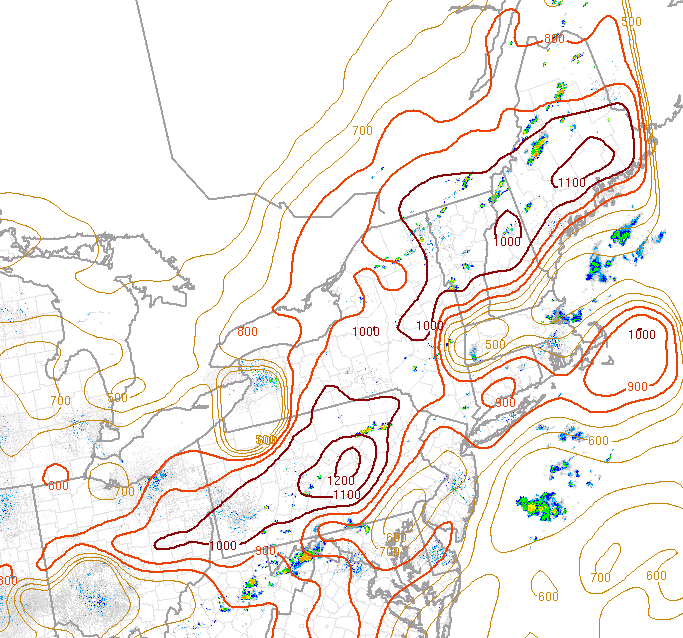
Downdraft CAPE Indicating The Potential For Strong Wind Gusts.

Most storms will remain below severe limits but a few could grow strong enough for some marginally severe wind gusts. Shown at left is downdraft CAPE, which measures how fast air can sink in downdrafts (as opposed to normal CAPE which measures how fast air can rise in updrafts), is plenty high enough for some strong wind gusts. Also to note is the drying out of the mid levels of the atmosphere on WV satellite (look at the trigger graphic and see the dry air (black) moving in). This will aid in the development of strong downdrafts by evaporationally cooling the air which will result in even more intense negative buoyancy due to the cooled parcels being even cooler than their environment. However, this development comes with a caveat: the drying aloft will be robbing the storms of any deep moisture. This is another factor that looks to limit any serious severe weather today.

By tonight, the front will be offshore and cooler air will be filtering in on NW winds. Lows will settle into the upper 50’s north and low to mid 60’s south. Skies will be mainly clear.
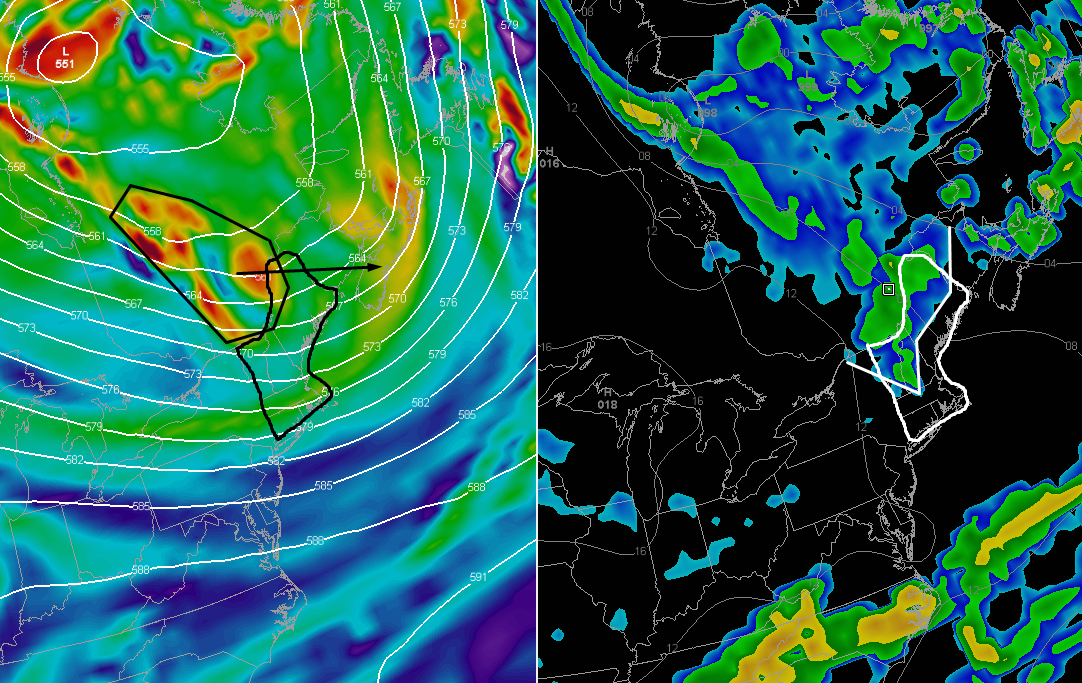
12Z GFS Showing The Setup For Afternoon Mountain Showers Tomorrow.

Tomorrow will be a mainly quiet day but there could be an afternoon shower or storm in the NE mountains due to a cold pool aloft associated with a lively upper level disturbance (shown in the left panel). It will trigger some daytime heating driven showers and storms. They will be clustered in the mountains and especially the NE mountains (shown in the right panel). Because freezing levels are so low (~10,000 feet), some small hail is possible in any of the stronger cells but no severe weather is expected. That activity will die down tomorrow evening with the loss of daytime heating.
Screenshot_217
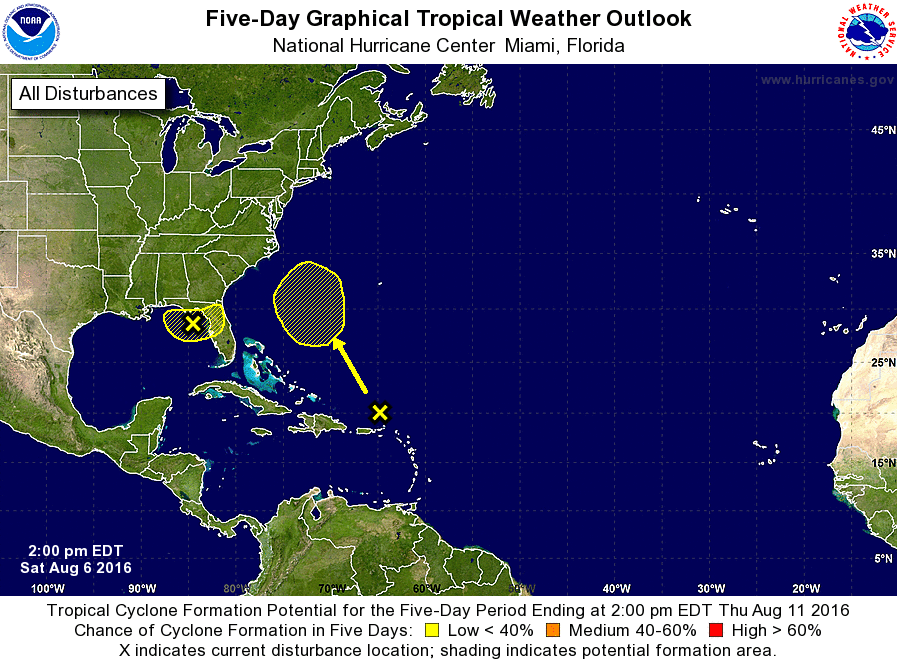
NHC 5-Day Tropical Outlook. Image Credit: NHC

What’s after tomorrow? A period of cool, quiet weather is likely through the middle of next week with highs each day in the low to mid 80’s with full sun and low humidity. As we approach next weekend, however, things change. Some beneficial rainfall could arrive next weekend if everything comes together right, which, as of now, is possible. This rainfall chance will be connected to that yellow ‘X’ over the NE Gulf of Mexico which the NHC is monitoring for possible tropical development. Right now that appears unlikely.

12Z GFS With The Pattern Overview For Next Weekend

A pattern change driven by the recurvature of Typhoon Omais off Japan will result in the development of strong high pressure near Bermuda by next weekend. SW flow on the west side of that high will direct moisture from a tropical disturbance over the NE Gulf of Mexico (shown on the tropical disturbance map above) towards us. At the same time, a front will be draped near the region which could help focus rainfall. Model guidance is quite optimistic we see drought easing rains from this setup and the pattern supports it so while it is certainly not a lock, it is something to keep a serious eye on as we enjoy another week of lovely weather.

I will not have a post tomorrow morning as I will be climbing Katahdin. Please refer to this post as well as to the NWS and local media for your forecast tomorrow. I will be back with a post Monday morning.

-Jack


Isolated Strong To Severe Storms Tomorrow

Hello everyone!

A cold front is slowly approaching from the west this evening and will arrive in far NW areas tomorrow morning before slowly sinking SE through the day tomorrow. This will bring showers and storms to the area, some of which could be severe. The risk for severe storms is greatest across far southern areas where the most instability will reside. Cooler and drier air filters in Sunday though a pop up shower is possible in the mountains. Cooler and drier air sticks around for Monday before heat and humidity slowly build back up again for mid-late next week. For more details as to the why behind the what, read on for a full analysis of the upcoming week of weather.

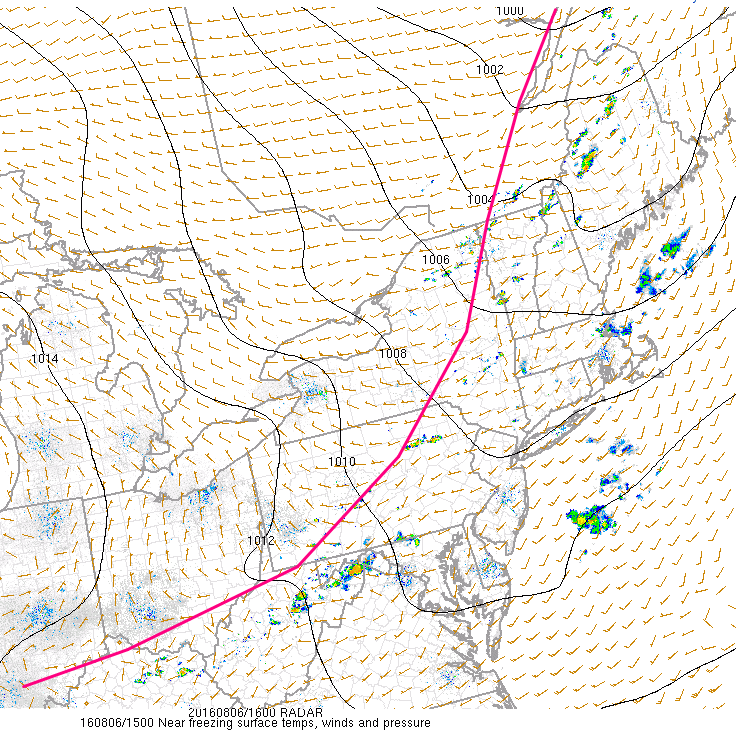
This Evening's Observed Conditions
This Evening’s Observed Conditions


Conditions this evening verify this morning’s forecast well with mainly sunny skies and warm temps observed across the area. As forecast, some more clouds are located over NW areas closer to the front. Temps are generally in the mid to upper 80’s with a few overachieving spots hitting 90. Temps up north and along the coast are cooler. Overall, this morning’s forecast worked out pretty well. The only exception might be that forecasted showers didn’t materialize in the mountains.

12Z 4km NAM Showing Scattered Light Showers Early Tomorrow Morning. Image Credit: Weatherbell

The front will continue to approach this evening and a batch of showers and storms currently just west of the St Lawrence valley will be drifting into the area by early tomorrow morning. Expect this batch of showers to be weakening as it approaches and it may just be some clouds by the time it reaches the coast. The moral of the story is that by tomorrow morning, the umbrella will need to be on standby as showers mainly of the light variety drift across the area. Temps tonight will remain in the 60’s for most with low 70’s south and west. The more noticeable factor will be the humidity which will be not too far below the temps. Soupy readings near 70 are likely by tomorrow morning. That moisture will help fuel storms tomorrow afternoon.

12Z GFS Showing The Trigger Setup Tomorrow Afternoon

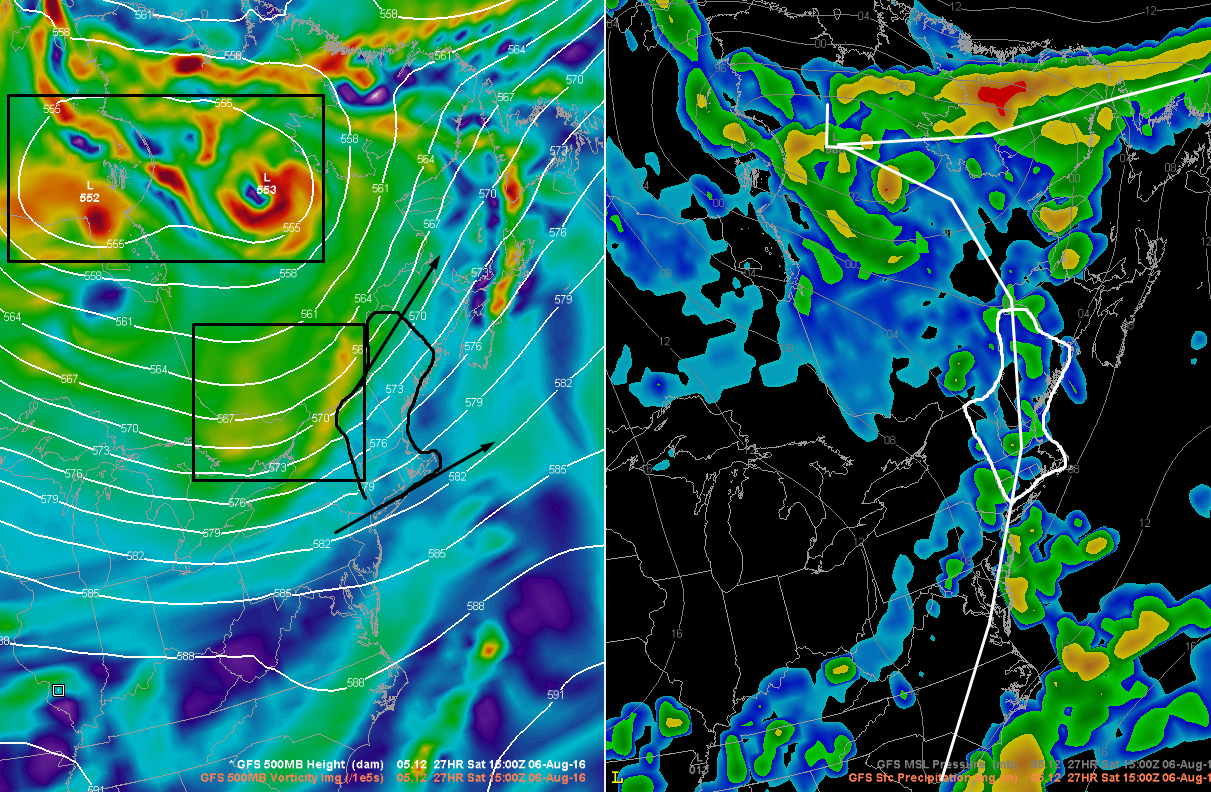
As I’ve discussed many times over the course of the summer, there are three things you need for widespread severe storms: a trigger, some fuel, and something to fan the flames. The trigger will be the cold front at the surface and an upper level disturbance aloft. The main storm both at the surface and aloft will remain well north of the area in Northern Canada but a filament of it will be swinging through our area tomorrow afternoon. There is little doubt that we will have enough of a trigger for storms tomorrow.

12Z NAM Showing Strong Shear Tomorrow Afternoon. Image Credit: Accuweather

There is plenty of shear around tomorrow to organize storms into segments capable of strong winds. Not only that, winds aloft will be pulling apart (black arrows) which will leave a ‘gap’ in the atmosphere aloft. To fill the gap, air from below will be rising. Rising air aids in storm development and the divergent flow aloft will be aiding in synoptic scale rising air. 30-40kts of 0-6km shear will be the organizer. There is high confidence that we will have a trigger and an organizer for tomorrow. The big question will be how much fuel do we have.

12Z NAM: Slower Front, More Fuel. Image Credit: Weatherbell

There are two possibilities for how much fuel is available tomorrow. Either there’s a bunch or there’s not a bunch. If the front is slower and there is more time for the sun to heat the ground ahead of it, we’ll have more fuel for bigger storms. The opposite is also true if the front is faster. Notice how over Northern New England (NE black box) there is instability on both sides of the front? Notice how this contrasts with the conditions over the OH valley (SW black box). The atmosphere is set up so that not all the moisture is chased off the instant the front arrives. As a result, even with a slightly faster front, there could be some storms. Now how fast do I think the front will move? For that, let’s examine the pattern as a whole.

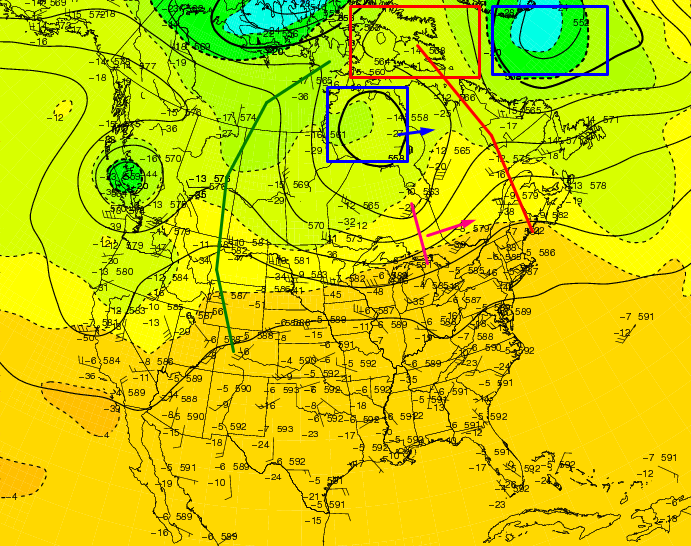
The 500mb Pattern This Morning. Image Credit: Meteocentre

The current pattern is quite amplified for the summer months. A large ridge extends from New England to Baffin Bay (red line) with an Omega block over Baffin Island (red box). Low pressure flanks this high both over the North Atlantic just south of Greenland and over Hudson Bay (blue boxes). The Hudson Bay low is the one we really care about because our disturbance is moving along the southern flank of it (pink line and arrow). Because of the wall of high pressure to its east (red line/box), both the low and the disturbance have nowhere to go. The high isn’t moving particularly fast because the whole pattern is blocked up (low S of Greenland, high to its east, low to the east of that, high to the east of that, and so on). Because of the blocked pattern, I tend to think that everything will be moving a little slower which would lead me to lean a little bit towards the NAM solution of higher energy.

Of course, even with a slower front, strong storms are far from a guarantee. Remember that there will be showers ongoing across the area tomorrow morning. Showers come with clouds and clouds don’t let as much sun through which means that the ground can’t heat up as fast or as much. A cooler surface temperature means that the difference between the surface and the upper atmosphere is slightly less which results in less energy for storms. For more on how this works, check out my UpPortland column from July (now online as a direct link!).

The greatest chance for strong to severe storms will be across southern areas where strong instability is most likely. The greatest threat will be for strong winds with lightning and heavy rain always possible with any storm, even those that are non severe. When thunder roars, go indoors!

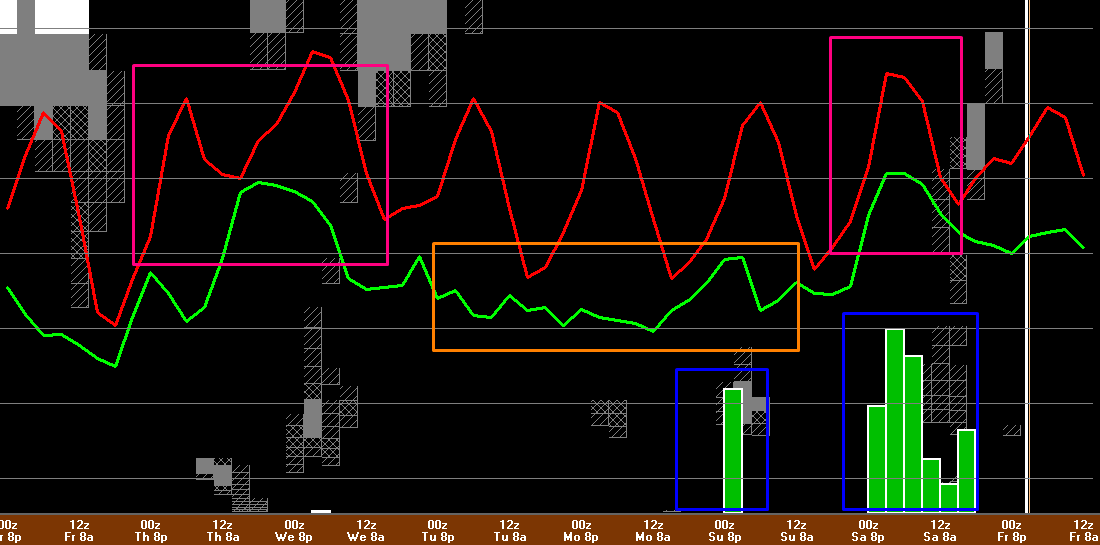
12Z GFS Showing The Outlook For The Next Week.

What happens after the front drifts offshore Saturday night? Cooler and drier weather is in the forecast for Sunday and into early next week (orange box, look at those dew points (green line)!). A spot shower is possible Sunday but otherwise the rest of the outlook looks fairly dry as we continue to grow our rain deficit. More heat and humidity threatens by mid to late next week.

Looking even farther into the future, a typhoon will be recurving off the coast of Japan this week which will set off a chain event across the entire Northern Hemisphere by the end of next week. Tropical moisture will be pooling off the Florida coast over the Gulf of Mexico during the same time. The pattern will be changing as a result of the typhoon so that a high pressure system will organize near Bermuda. The flow on the west side of the Bermuda high will be pointing that tropical moisture in our general direction by next weekend. At this point, that looks like our next chance for a steady, heavy rainfall. I’ll continue to watch it as we get closer.

-Jack